What a Professional Churrasqueiro Brings That a Home Griller Cannot
The most fundamental difference between a home churrasco and a professional one is fire management. A professional churrasqueiro builds and maintains an ember bed with specific temperature zones — high heat for quick searing, lower sustained heat for slow-cooking ribs, and a warm zone for resting. This fire architecture requires knowledge and physical attention over many hours. Most home hosts lose control of the fire within 90 minutes and spend the rest of the party apologizing for charred chicken and undercooked sausages.
Cut selection and sourcing is the second major differentiator. A professional churrasqueiro knows which açougue in their city receives the best picanha, which cut thickness is ideal for each cooking method, and how to identify a properly marbled fraldinha versus a cheap one. They arrive with cuts that most home hosts would not know how to find or evaluate — and this sourcing quality is immediately apparent in the eating.
The third differentiator is the host's experience of their own party. A home host managing the grill is functionally a kitchen worker for the entire event. They miss conversations, skip the first drinks, and arrive at their own table sweaty and late. A professional churrasqueiro handles everything at the grill, freeing the host to circulate, welcome guests, and be fully present.
The Premium Cuts: What a Churrasco Chef Will Bring to Your Grill
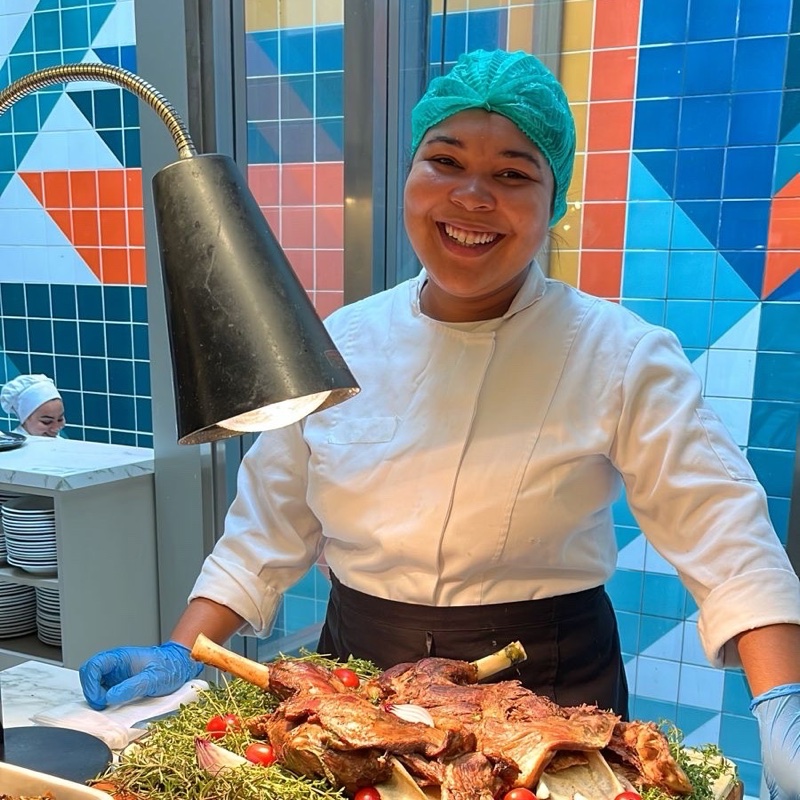
Picanha — the top sirloin cap, a cut unique in its prominence to Brazilian churrasco — is the undisputed king of the grill. A professional churrasqueiro selects a picanha with the right fat cap thickness (ideally 8–10mm), scores it in a crosshatch pattern, seasons it only with sal grosso, and cooks it over high direct heat. The outer crust caramelizes while the interior remains pink and tender. Sliced thin against the grain and served immediately, a properly cooked picanha is one of the great pleasures of Brazilian food culture.
Costela de boi no bafo is the chef's signature — and the preparation that most clearly demonstrates professional expertise. The rib rack is wrapped in foil (sometimes with a small amount of beer or water) and placed over indirect, sustained heat for eight to twelve hours. The collagen breaks down slowly, converting to gelatin, and the meat reaches a texture that is simultaneously firm enough to hold and tender enough to pull apart with almost no resistance. This preparation requires infrastructure (a proper grill or parrilla), wood management over many hours, and the patience of a professional.
Fraldinha, linguiça artesanal, coração de frango, galeto — these supporting players in the churrasco sequence require their own timing and technique. The linguiça should be seared over high heat until the casing blisters and the fat renders without burning. Chicken hearts go on skewers and must be cooked quickly to remain pink inside. A professional manages all of these in sequence, so the table receives a parade of different cuts rather than a single moment of service.
Pro Tip
Ask the churrasqueiro to include a corte less common on the standard menu — fraldinha, bife de chorizo, or maminha — alongside the picanha and costela. These cuts are often revelations for guests who know only picanha and linguiça, and a skilled churrasqueiro will cook each to its specific ideal.
Sides That Elevate the Experience
The quality of a churrasco's sides determines whether it is a meal or an experience. A professional churrasqueiro approaches farofa, vinagrete, pão de alho, and queijo coalho with the same care as the meat — and delivers versions that make guests realize they have never actually tasted these dishes at their best.
Farofa de manteiga com bacon — made fresh, not from a packet — with crunchy bits of bacon, cheiro-verde, and toasted cassava flour has a texture and aroma that the packaged version simply does not approach. Vinagrete made from perfect ripe tomatoes, fresh onion, and cheiro-verde with the right acidity lifts every piece of meat it accompanies. Pão de alho — bread wrapped in foil with butter, garlic, and herbs, placed directly on the embers — comes out steaming and fragrant, impossible to resist before the meat even arrives.
Queijo coalho grelhado — a quintessentially northeastern cheese that holds its structure over direct heat and develops a golden crust — is the aperitivo that signals the churrasco has begun. A churrasqueiro who serves fresh queijo coalho on skewers as guests arrive, while the fire is building and the larger cuts are beginning their long rest, sets the tone for everything that follows.
Equipment and Setup: What You Need at Home
A churrasco personal chef can work with what you have — but the quality of your churrasqueira makes a significant difference to the range of preparations available. A built-in churrasqueira with adjustable grill height is ideal: the churrasqueiro can control heat by raising and lowering the grill. A simple freestanding charcoal grill works for most cuts. A gas grill will produce acceptable results for quick preparations but does not allow the slow costela no bafo that requires sustained wood or charcoal management.
If you don't have a churrasqueira, mention this at booking. Many professional churrasqueiros own portable equipment — a parrilla argentina, a large charcoal grill on wheels — that they can bring to any outdoor space. A courtyard, terrace, rooftop, or garden is all that is needed. Confirm the logistical details (access for equipment transport, power availability, space dimensions) when finalizing the booking.
Wood or charcoal type also matters. A professional churrasqueiro will have preferences — eucalipto or lenha de lei for long burns, carvão vegetal for quick, clean heat — and may bring their own. Discuss this in advance, especially if you want the costela no bafo preparation, which requires a specific fuel arrangement for the multi-hour cook.
✓Confirm your grill type and condition before booking
Tell the churrasqueiro exactly what type of grill you have, when it was last cleaned, and whether it has adjustable height. This information shapes what preparations are possible and whether the chef needs to bring equipment.
✓Determine whether outdoor space is available and accessible
Churrasco requires outdoor space for safety and smoke management. Confirm access, dimensions, and any restrictions (apartment building rules, neighbor proximity) when booking.
✓Ask the churrasqueiro to arrive 3+ hours before service
Building a proper ember bed, getting costela started, and preparing all the sides takes significant time. A churrasco chef should arrive at least 2.5–3 hours before you want to begin serving.
✓Confirm the cuts list and sourcing plan in advance
Ask the churrasqueiro to share the planned cuts, quantities per person, and where they will source the meat. This ensures there are no surprises about what appears on the grill or what it costs.
✓Clarify service format — continuous or single service
Traditional churrasco is continuous service — cuts arrive at the table in sequence over 90 minutes. Confirm whether this is the format, or whether the chef will plate and serve all at once, and set guest expectations accordingly.
Argentine Asado vs. Brazilian Churrasco: What's the Difference?
Both traditions involve cooking large cuts of meat over open fire, but the approaches are distinct in ways that matter to the eating experience. Brazilian churrasco uses charcoal or wood, typically with cuts suspended on long metal skewers (espetos) held at an angle over the embers. The cuts rotate or are flipped; service is continuous; the churrasqueiro circulates among guests carving directly at the table with a long knife. Salt (sal grosso) is the primary — and often only — seasoning.
Argentine asado uses a parrilla — a flat, adjustable grill grate — over wood coals specifically from quebracho or other hardwoods, producing a slower, more aromatic fire. Cuts are laid flat on the grate and managed for long, gentle cooks. The asado sequence begins with offal (morcilla, chorizo, chinchulines), moves to larger beef cuts, and ends with vegetables. The aesthetic is more austere, the smoking more pronounced, and the emphasis is on the quality of the cut and the fire rather than the showmanship of espeto service.
A skilled churrasqueiro may offer either format — or a hybrid. If you're interested in the asado format specifically, note this at booking. Some Brazilian chefs with gaúcho roots have deep familiarity with the Argentine tradition and can deliver a full asado experience, including the parrilla equipment, if you prefer.
Pro Tip
If you want to serve international guests who don't know Brazilian food culture, the continuous espeto service format is more interactive and theatrical — the churrasqueiro circulating and carving tableside is a visual and social experience that communicates Brazilian hospitality directly.
Making the Host's Experience the Priority
The underappreciated value of a churrasco personal chef is not in the food alone — it is in returning the host to their own party. Every Brazilian host who has managed their own churrasco knows the experience: standing at the grill from 11am to 3pm, fielding questions ('está pronto?'), managing the fire alone, missing the conversation, eating last and standing up. By the time the meal is over, the host is exhausted rather than nourished.
A professional churrasqueiro changes this completely. The host greets guests, circulates with drinks, sits at the table, and receives the meal along with everyone else. The only role the host plays relative to the grill is accepting compliments. This experiential transformation — from cook to guest at your own party — is what most clients name as the single greatest benefit of the service.
This is also why churrasco is one of the most popular personal chef formats for milestone birthday parties, retirement celebrations, and large family reunions in Brazil. The host matters on these occasions. A professional at the grill ensures they get to be fully present.