The Three Main Event Service Formats
The service format you choose is the single most important variable in per-guest pricing. There are three main options, each with a distinct price structure, flow and guest experience. Understanding which format fits your event is the first step in building an accurate budget.
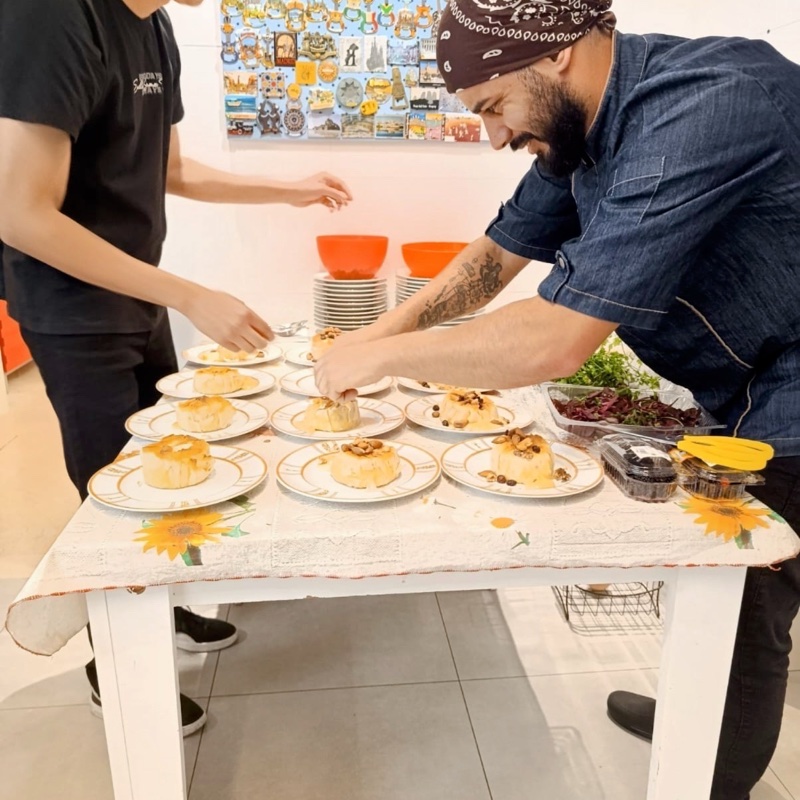
Finger food and canapés (also called cocktail or coquetel format) is the most cost-effective format for larger groups. Guests circulate; small bites are passed on trays or laid on display tables. The chef focuses on volume and variety — typically 8–12 distinct items, each produced in large quantities. This format works beautifully for baby showers, corporate cocktails, bachelorette parties and birthday celebrations where dancing or socializing is the priority.
Buffet (buffet corrido) places food in serving stations that guests visit themselves. The chef prepares a defined selection of dishes — typically 2–3 proteins, 3–4 sides, salads and a dessert station — in sufficient volume for multiple passes. This is the standard format for family gatherings (almoço de família), casual birthday parties and events where guests want to eat at their own pace.
Seated dinner (jantar servido) is the most formal and most expensive format. Each course is plated individually and brought to the guest. The chef prepares courses in sequence and requires service staff to manage the table. This format suits corporate dinners, intimate wedding receptions and high-stakes client events.
Per-Guest Pricing by Format
In São Paulo and Rio de Janeiro, chef service fees (excluding ingredients) for finger food events typically range from R$60–R$120 per guest. At the lower end, expect 8–10 well-executed items in sufficient volume; at the upper end, 12–14 items with more elaborate preparations, specialty items (mini lobster rolls, premium beef tartare, oysters) and a more refined presentation aesthetic.
Buffet format chef fees sit at R$100–R$200 per guest, reflecting the larger volume of cooking and the broader menu design involved. A well-executed buffet for thirty guests — two proteins, four sides, a salad bar and a dessert station — requires significant prep time and a chef who understands batch cooking without sacrificing quality.
Seated dinner service runs R$200–R$450 per guest for the chef's fee, depending on the number of courses and the menu's complexity. This format also requires additional service staff, which adds a separate cost per server per hour. For events above fifteen guests, at least one dedicated server is necessary; for twenty or more, two.
✓Finger food / cocktail (15–50 guests)
Chef service: R$60–R$120 per guest + ingredients R$40–R$90 per guest = total R$100–R$210 per guest.
✓Buffet (20–80 guests)
Chef service: R$100–R$200 per guest + ingredients R$60–R$120 per guest = total R$160–R$320 per guest.
✓Seated dinner (10–30 guests)
Chef service: R$200–R$450 per guest + ingredients R$80–R$180 per guest = total R$280–R$630 per guest.
✓Service staff add-on
R$80–R$150 per server per hour. Budget for one server per 10–15 seated guests.
✓Equipment and rentals
Chafing dishes, display platters, serving equipment — confirm what the chef provides vs. what you need to rent.
Ingredient Costs at Scale
Ingredient costs for events follow a similar logic to private dinners but benefit from bulk purchasing power. A chef buying shrimp (camarão) for thirty guests at the Ceasinha or the Mercado Municipal pays less per kilo than a household purchase at a supermarket. This is one of the structural advantages of working with a professional who sources regularly: their supplier relationships translate into better ingredient economics for you.
For a finger food cocktail for thirty guests, plan for ingredient costs of R$40–R$90 per person, depending on the proportion of premium items (prawn cocktail canapés, carpaccio on crostini, smoked salmon blinis) versus everyday Brazilian bites (coxinha, pão de queijo, mandioca frita, mini cebola empanada). A menu that leans on expertly executed Brazilian classics is both more affordable and often more crowd-pleasing than one loaded with imported luxury items.
For a buffet of forty guests, ingredient costs typically run R$60–R$120 per person. A menu of arroz, feijão, two proteins (frango ao molho de ervas and picanha grelhada), farofa, vinagrete and a salad is extremely well-executed Brazilian cooking at R$50–R$70 per person in ingredients. A premium menu with imported cuts and specialty sides pushes to R$100–R$150 per person.
Pro Tip
Ask the chef to propose a menu that balances one or two premium hero items with high-quality Brazilian staples. One stunning protein (a slow-roasted whole costela, a whole grilled fish with herbs) anchors the table and signals quality, while the accompaniments keep ingredient costs reasonable.
How Group Size Affects Per-Person Cost
Per-guest cost decreases as group size increases — up to a point. A chef's fixed costs (travel, setup, cleaning, initial sourcing trip) are the same whether twenty or fifty guests attend. Spreading those fixed costs over more guests reduces the per-person contribution of overhead, which is why large events are structurally more cost-efficient than small ones on a per-head basis.
The inflection points to understand: below fifteen guests, many chefs apply a minimum event fee (typically R$1,500–R$3,000 depending on format) rather than a pure per-person rate. Between twenty and fifty guests, per-person pricing is most favorable. Above sixty guests, a single chef may not be sufficient — additional kitchen assistance may be needed, which adds cost.
If your guest list is between forty and sixty people, ask the chef whether they need an assistente de cozinha (kitchen assistant). Many experienced event chefs work with a fixed team; others add assistance per event. Confirm this in the booking brief — an underprepared kitchen for fifty guests produces worse food and a more stressed chef.
Event Type and Its Effect on Cost
The occasion shapes the menu format and, with it, the price. A baby shower (chá de bebê) typically calls for a mix of sweet and savory finger food — sandwiches, mini quiches, fruits with cream, petit fours, macarons — with a relatively accessible price structure. Budget R$100–R$200 per guest all-in for a well-executed chá de bebê in São Paulo.
A corporate cocktail or client dinner has higher expectations for ingredient quality and presentation — it is a business event, and the food reflects on the host's brand. Budget R$180–R$350 per guest all-in for a corporate cocktail of twenty to forty guests; R$300–R$600 per guest for a seated corporate dinner.
A family reunion (almoço de família) with a churrasco chef calls for a different calculation altogether: the churrasqueiro typically charges a per-guest rate of R$60–R$120 for their service (including fire management, meat cutting and timing) plus the cost of the meat itself — picanha, costela, fraldinha, linguiça — which can range from R$50 to R$150 per person depending on the cuts and quality. An all-in Sunday churrasco for twenty guests with a professional churrasqueiro typically runs R$150–R$250 per person.
Building Your Event Budget: A Step-by-Step Framework
Start with your guest count and your format choice. These two variables establish the structural range for your budget. Then add: the chef's per-guest service fee + estimated ingredient cost per person + any add-ons (service staff, equipment, special dietary accommodations, décor coordination).
Include a 10–15% buffer for unexpected costs: a guest count that grows by three after the final headcount was submitted, an ingredient substitution because the planned fish was not available fresh that morning, an additional hour of service because the evening ran long. Events reliably cost slightly more than planned; building the buffer in from the start means no unpleasant surprises.
For events above R$8,000–R$10,000 total, request a formal written quote from your chef before confirming the booking. A written quote itemizes service fee, estimated ingredient cost, add-ons and any travel or minimum charges. It protects both parties and ensures you are budgeting against actual numbers, not estimates.
✓Confirm guest count (firm, not approximate)
Ingredient purchasing and staffing plans are built on headcount. A 20% change at the last minute is operationally difficult.
✓Choose service format before requesting a quote
Finger food, buffet and seated dinner are priced differently. Decide format first.
✓Clarify ingredient inclusion
Confirm whether the chef's quote includes ingredients or if that is a separate line item.
✓Budget for service staff separately
One server per 10–15 seated guests at R$80–R$150 per hour. A 3-hour event with 30 seated guests = 2 servers x 3 hours x R$100 = R$600.
✓Add a 10–15% buffer
Events almost always have one small variable that wasn't in the original plan. Build it in.
How Personal Chef Catering Compares to Traditional Buffet Companies
Traditional buffet companies (empresas de buffet) in Brazil operate at scale — they service multiple events per weekend with standardized menus, central kitchen preparation and logistics built for volume. Their pricing for a mid-range event typically runs R$120–R$250 per person all-in for a buffet format, including food, servers, equipment and logistics.
A personal chef event at the same format and quality level typically falls in the same price range, with the structural advantage of full menu customization, a chef who knows your dietary needs and a more personal relationship throughout the planning process. The disadvantage is that a personal chef is not a logistics company — they may not provide tables, chairs, linens or equipment beyond their kitchen kit, whereas a buffet company often includes these.
For events under forty guests, a personal chef almost always delivers better food quality and more personalization than a buffet company at a comparable or slightly higher price. For events above eighty guests, the logistics complexity may favor a professional catering company with the infrastructure to manage that scale efficiently.