The Real Problem with Family Meal Planning
Brazilian families face a particular paradox: the country has some of the world's most nutritious and flavorful ingredients — from mangoes and açaí in the north to fresh seafood along 7,000 kilometers of coastline — yet weeknight dinner for most urban families in São Paulo, Curitiba or Belo Horizonte often defaults to delivery pizza or fast-food because the mental and physical load of cooking for diverse preferences is simply too high after a full work day.
Children's food preferences are not fixed — they are trained. Research on food neophobia in children shows that repeated, low-pressure exposure to a variety of flavors and textures is the single most reliable path to expanding what kids will eat. A personal chef who understands child development brings this principle to the prep table: introducing new ingredients gradually, pairing them with already-accepted flavors, and presenting food in ways that feel approachable rather than threatening.
The breakthrough for most families is not finding the magic vegetable their child will eat — it is removing the cognitive and physical labor of cooking from the parents' week so they arrive at the dinner table as participants rather than exhausted kitchen workers.
How a Family Chef Navigates Picky Eaters
An experienced family chef starts with a detailed intake: what each child currently accepts without argument, what gets pushed to the side of the plate, and what causes a full refusal. This is not about accommodating pickiness indefinitely — it is about building a bridge from the accepted to the new, one meal at a time.
Texture is often the real barrier. Many children who 'hate vegetables' are actually responding to overcooking. A chef who roasts batata-doce until caramelized at the edges, blanches broccoli to bright green with a slight crunch, or purées couve (kale) into a smooth vinagrette-like sauce over rice is using professional technique to present the same nutritious ingredients in a form that bypasses texture aversion.
Strategic composition also helps: building meals around a protein the child already accepts (frango grelhado, omelete, peixe empanado) and varying only the accompaniments allows the chef to introduce new flavors alongside a safety anchor. Over weeks, the range of accepted foods expands naturally.
Pro Tip
Ask the chef to prepare one 'adventure component' per week — a new vegetable, grain or flavour presented alongside familiar favourites. Low stakes, no pressure, but consistent novelty is how palates grow.
Nutritional Priorities for Growing Children
Brazilian pediatric nutritional guidelines emphasize a diet rich in minimally processed whole foods, diverse vegetables, adequate protein for growth, and complex carbohydrates for sustained energy. In practice, this means prioritizing: lean proteins (frango, ovos, peixe, feijão), iron-rich foods (carne bovina, grão-de-bico, folhas verde-escuras), calcium sources (queijo, iogurte natural, couve, gergelim), and vitamin C-rich produce (laranja, goiaba, pimentão) that boosts iron absorption.
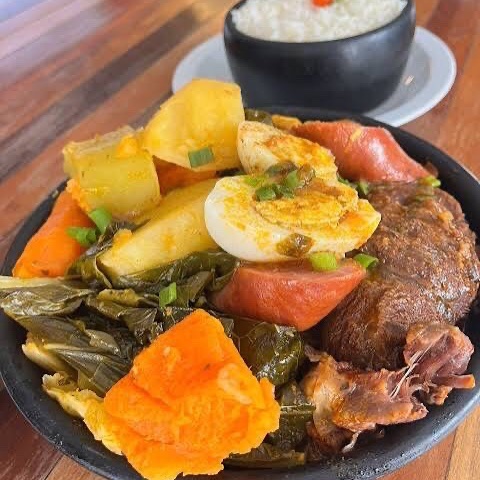
A personal chef translates these nutritional priorities into dishes children recognize and enjoy. Arroz com frango — Brazil's most universally accepted child food — can be elevated with real caldo de frango caseiro, fresh herbs, and seasonal vegetables without becoming unrecognizable. Feijão tropeiro from Minas Gerais, simplified slightly for younger palates, delivers protein and fiber in a form children often love. Escondidinho de carne, where a vegetable purée tops shredded meat, is a natural vehicle for introducing root vegetables.
Portion sizes matter, too. A chef preps family-scale quantities with appropriate child servings in mind — typically 60–70% of an adult portion for school-age children — reducing waste and making the economics of family meal prep more efficient.
✓Iron-rich foods three or more times per week
Carne bovina, feijão-preto, lentilhas and dark leafy greens support cognitive development and energy in growing children.
✓At least two different vegetables per meal
Variety in color signals variety in phytonutrients. Aiming for two per meal across the week ensures broad micronutrient coverage.
✓Whole grain options alongside refined carbs
Arroz integral mixed 50/50 with arroz branco is a transition strategy most children accept without noticing.
✓Minimal added sugar in savory dishes
Many commercial sauces and condiments carry high sugar loads. A chef seasoning from scratch avoids this entirely.
✓Calcium-rich food at least once daily
Iogurte natural, queijo minas, couve or tapioca com requeijão all count and are naturally accepted by most children.
A Sample Week of Family Meals a Chef Might Prepare
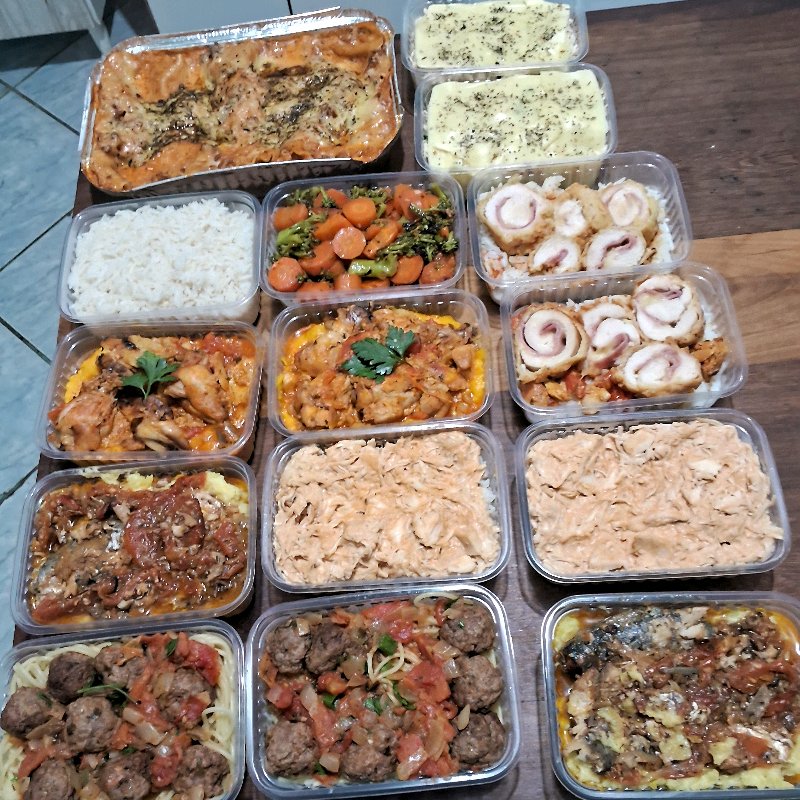
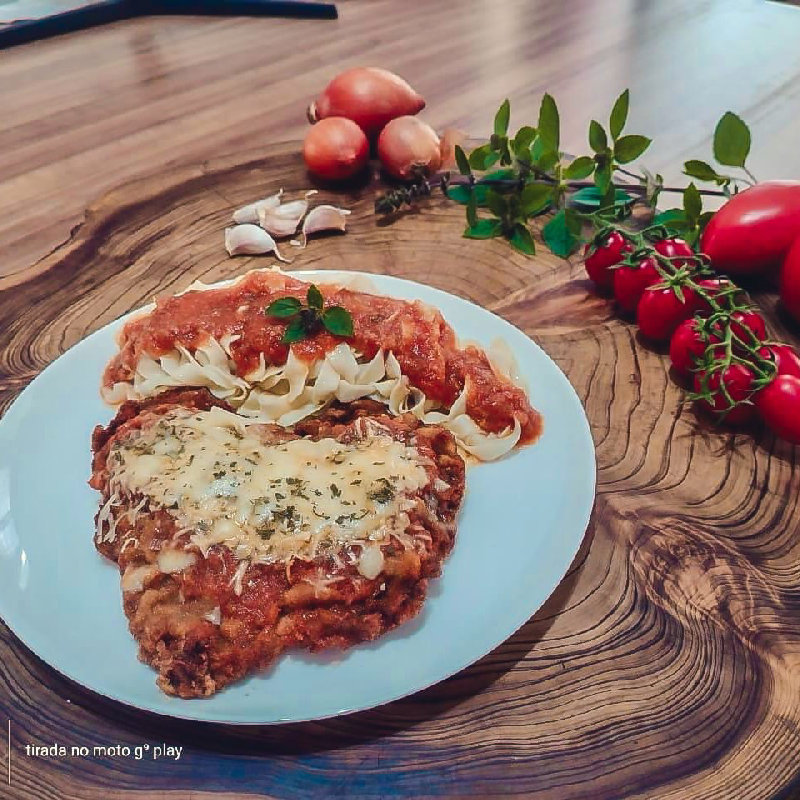
A family meal prep session produces a week's worth of dinners (and often lunches) from a two-to-three hour kitchen visit. A representative week might look like this: Monday — frango assado com batata-doce e vagens verdes; Tuesday — macarrão ao sugo caseiro com carne moída e abobrinha; Wednesday — peixe grelhado com arroz de couve e farofa de mandioca; Thursday — omelete de forno com queijo e brócolis; Friday — escondidinho de mandioca com frango desfiado. Each dish is designed to have wide family acceptance while rotating proteins and vegetables across the week.
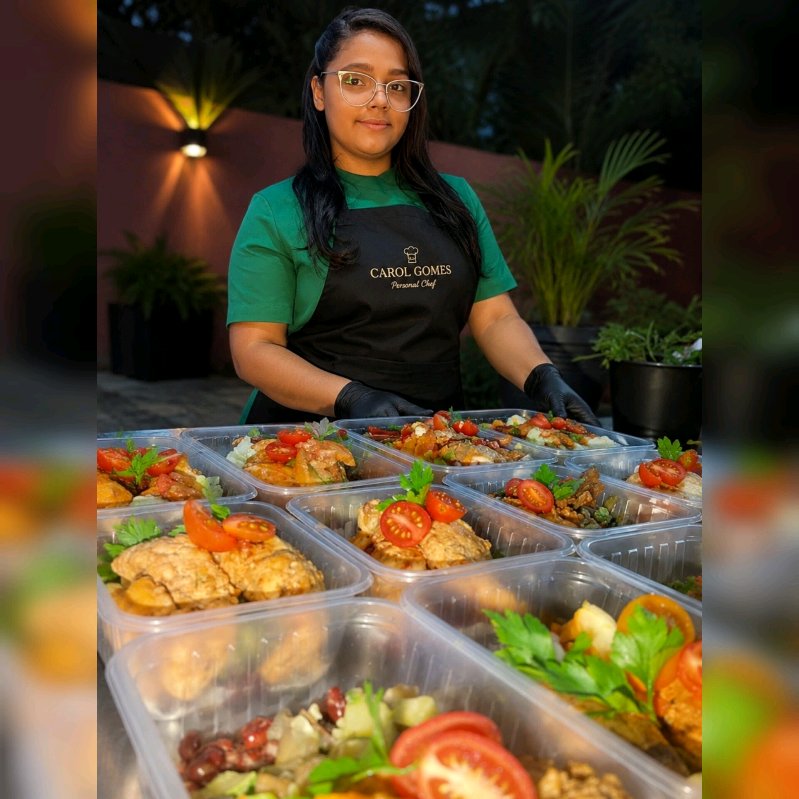
Lunch boxes are a natural extension of the same prep session. A chef can portion individual containers for school-age children with a protein, grain, vegetable and fruit component — ready to grab from the fridge each morning. Eliminating the daily lancheira stress is, for many parents, the single most valuable outcome of the service.
The snack category is often overlooked in family prep but has an outsized impact on overall diet quality. A chef might prepare a batch of bolinhos de aveia com banana e mel, cenoura palito com homus caseiro, or cubos de queijo com frutas frescas — all items that replace ultra-processed afternoon snacks with whole-food alternatives children actually reach for.
Cooking Around Allergies and Intolerances in Family Meals
Food allergies and intolerances are increasingly common in Brazilian families. Lactose intolerance, gluten sensitivity, egg allergy and tree nut allergy each require specific protocol in a kitchen. A professional chef trained in allergen management knows to check every ingredient label, use dedicated utensils for allergenic ingredients, and build a menu structure that avoids cross-contamination.
For families with a lactose-intolerant child alongside siblings who eat dairy normally, the chef might prepare a dairy-free version of a dish as the default and offer cheese as a tableside addition for those who tolerate it — a practical approach that avoids making the allergic child feel separated from the family meal.
When briefing a chef on family allergies, be specific: not just 'no gluten' but whether the household needs to be fully gluten-free or simply gluten-reduced. Not just 'dairy allergy' but whether it is a milk protein allergy (requires zero dairy) or lactose intolerance (may tolerate hard aged cheeses and ghee). The precision of the brief determines the safety of the outcome.
Pro Tip
Prepare a single written brief with all family members' names, ages, and dietary restrictions/preferences. Send it to the chef before the first session and update it whenever things change. A shared document in WhatsApp or Google Docs works perfectly.
What Families Pay and What They Get
Family meal prep pricing in Brazil varies by city, family size and session length. In São Paulo and Rio de Janeiro, a typical two-to-three hour session covering five to seven dinners plus lunch components for a family of four costs between R$500 and R$1,100, plus ingredients. Broken down per meal, this is R$70–R$160 per dinner for four people — often less than a single delivery order of similar quality.
The less visible return is time. Parents who stop cooking weeknight dinners from scratch reclaim one to two hours per day that can go toward being present with children rather than stressed in the kitchen. The cumulative value of that time — across a month or a year — is immeasurable in monetary terms.
For families in cities like Porto Alegre, Curitiba or Brasília where the myChef network is growing, per-session pricing is often 15–25% lower than São Paulo equivalents while delivering comparable quality. Ingredients purchased by a chef who knows good produce suppliers often cost less than what a home cook pays retail, partly offsetting the service fee.
Building a Long-Term Relationship with a Family Chef
Unlike a one-off dinner party chef, a family meal prep chef is ideally a recurring relationship — weekly or biweekly — that deepens over time. The chef learns the family's rhythms, which child had a growth spurt and needs larger portions, which parent is in a fitness phase requiring higher protein, and how to adjust seasonally as produce and family schedules change.
After three to four sessions, most families find the chef is working largely autonomously: shopping, prep and cleanup happen in the background of the family's week without requiring much active management. This is the steady state that makes the service genuinely transformational rather than just a novelty.
Communicate openly and regularly. A two-minute WhatsApp check-in before each session to flag any schedule changes, foods that ran out quickly, or dishes that did not land with the children keeps the service continuously improving. The best family chef relationships evolve the menu month by month as children's palates expand and family needs shift.