The Brazilian Christmas Ceia: Tradition and What Families Expect
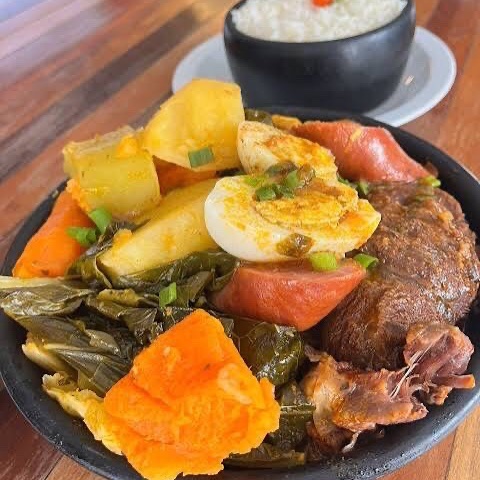
The ceia de Natal in Brazil is served on the night of December 24th, after midnight mass or immediately before it—a tradition that remains strong across Catholic families in São Paulo, Minas Gerais, Rio de Janeiro, and Bahia. The table is laden: a roasted turkey (peru assado) or pernil de porco (slow-roasted pork leg), a farofa made with pork fat, raisins, and eggs, rice with raisins and almonds, salads of beets and potatoes, and a dessert spread anchored by rabanadas (Brazilian French toast with sugar and cinnamon) and pavê (a no-bake layered cream dessert).
These dishes are not merely food—they are the sensory language of the holiday. Families have specific expectations about how each dish should taste, often based on a grandmother's recipe or a version eaten in a specific city. A personal chef who works the holiday season becomes expert at asking the right questions: how does your family like the farofa? Is the turkey traditionally stuffed? Do you serve salpicão (a creamy cold chicken salad) or not? The answers shape a menu that feels like your family's Christmas rather than a generic Christmas dinner.
Increasingly, Brazilian families are supplementing or replacing the traditional ceia with international holiday dishes—a honey-glazed ham, a prime rib, a lobster bisque—either because they've lived abroad and brought those traditions home, or because they want to create new traditions that feel distinctly theirs. A personal chef is the ideal partner for this kind of culinary evolution: they can hold the farofa sacred while introducing a new showstopper to the table that becomes next year's expectation.
Pro Tip
Share family-specific recipe details with your chef—how your grandmother made the farofa, which brand of cream your mother uses in the pavê, whether the turkey was always stuffed with a specific recipe. A chef who understands these specifics can deliver food that tastes like home rather than a professionally correct version of Christmas.
Christmas Menu Ideas: Traditional and Contemporary
A traditional Brazilian Christmas menu is generous and complex. A well-executed version for a family of twelve to fifteen might include: chester assado with orange glaze and herbs; pernil with wild garlic and herbs; farofa with smoked bacon, egg, and raisins; arroz natalino with almonds and raisins; salpicão de frango with grapes and palm heart; beet and carrot salad; and a dessert table of rabanadas, pavê de chocolate, panetone tiramisu, and fresh fruit salad with mint and condensed milk.
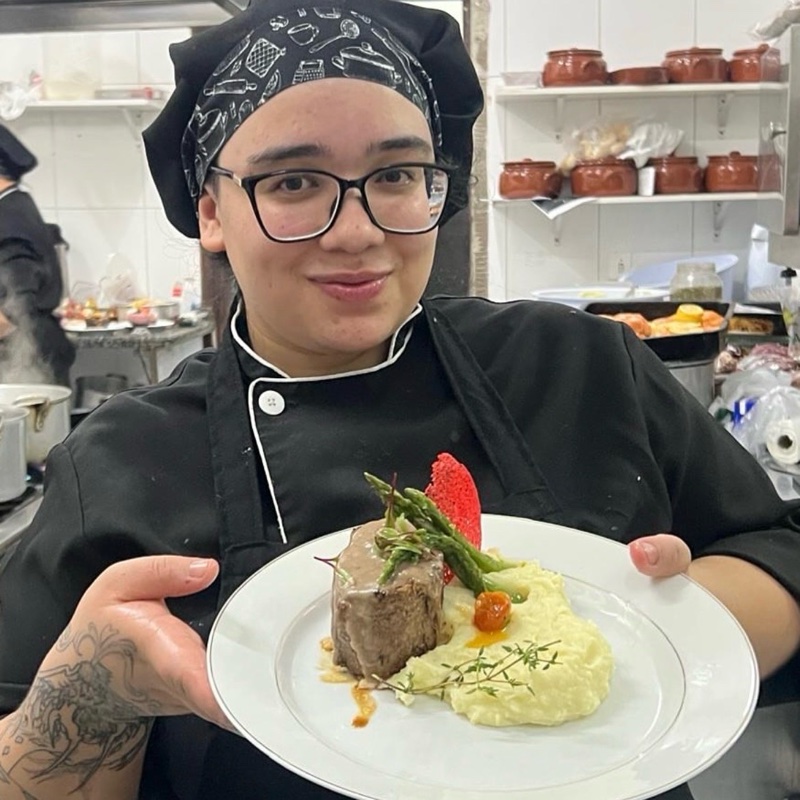
Contemporary Christmas menus in urban Brazil—particularly in São Paulo and Rio de Janeiro—often lean toward a more international profile while maintaining one or two traditional anchors. A contemporary Christmas dinner might feature a beef tenderloin Wellington as the centerpiece, alongside a farofa that honors tradition, a burrata and roasted vegetable salad, a creamy lobster bisque served in small cups as a starter, and a pavê as the dessert that signals 'this is still Brazil at Christmas.'
For families with dietary diversity—vegans, vegetarians, celiacs—a skilled chef redesigns the menu so no one is relegated to side dishes. A vegan chester can be created with a stuffed acorn squash centerpiece; gluten-free farofa is easily made with tapioca-based alternatives; and a vegan pavê using coconut cream is indistinguishable from the original to most palates. These adaptations should be planned, not improvised on the day.
✓Main protein
Turkey, chester, pernil, or beef tenderloin—confirm the family's preference and any traditional preparation requirements.
✓Farofa
The anchor of the Brazilian Christmas table—confirm the family's style (dry, moist, with bacon, with dried fruit).
✓Rice dish
Arroz natalino with almonds and raisins, or a simpler arroz branco—confirm which is expected.
✓Cold salads
Salpicão, beet salad, potato salad—the cold side dishes that are prepared in advance and served at room temperature.
✓Dessert table
Rabanadas, pavê, panetone preparations, and fresh fruit—the dessert table should be abundant and visually generous.
Réveillon: Designing a New Year's Eve Feast
The Réveillon dinner is distinct from the Christmas ceia in register and intention: it is a celebration of anticipation rather than tradition. Where Christmas dinner is about family memory and comfort, the Réveillon meal is about indulgence, festivity, and welcoming the new year with joy. The menu should reflect this: more champagne, more luxury ingredients, more theatrical presentations.
Lentils are the most important single ingredient in the Brazilian Réveillon meal—they represent money and prosperity in the new year, and no serious Réveillon dinner omits them. They're typically served as a warm lentil salad with caramelized onions and pancetta, or as a soup. Beyond lentils, the Réveillon menu can go in almost any direction: seafood is traditional (shrimp, fish, and shellfish represent luck in many regions), and elaborate desserts with gold leaf and sparkling elements are appropriately festive.
Many São Paulo and Rio families now celebrate Réveillon in beach houses along the Litoral Norte (São Paulo coast), in Búzios, in Florianópolis, or in the sítios of the countryside. For these locations, a personal chef traveling with or meeting the family is logistically practical and produces far better results than trying to source food in an overwhelmed coastal town kitchen on December 31st.
The countdown moment—midnight itself—should be coordinated with the chef so that a special element is staged at that exact time. A champagne tower, a canapé of caviar and gold leaf blini, a fireworks-themed dessert with sparklers—whatever you choose, brief the chef so the kitchen is quiet and everyone is at the table at midnight rather than someone still cooking in the back.
Pro Tip
For Réveillon dinners where guests will be coming and going around midnight (going to the beach, returning for dessert), design the meal in two clear phases: an early dinner service at 9–10pm, and a late-night snack and dessert service at 1–2am after the celebrations. The chef prepares both phases in advance and simply plates the second service when needed.
Holiday Menu Ideas for International Families and Expats
Brazil's expatriate community—concentrated in São Paulo's Pinheiros, Itaim Bibi, and Moema neighborhoods—often wants a holiday dinner that feels like home: a proper British roast, a traditional American Thanksgiving, a French réveillon with oysters and foie gras, or a Scandinavian Christmas with gravlax and smoked herring. Personal chefs who work this market typically have international training or experience and can execute these traditions authentically.
For expats, the sourcing challenge is real. Proper cranberry sauce, specific cuts of beef for British roasting traditions, or high-quality oysters for a French réveillon require advance sourcing in São Paulo's specialty import shops—places like Empório Santa Maria, Eataly, or specialty fishmongers in the Mercado Municipal. A chef who knows these sources can guarantee ingredient quality that a self-catering expat might struggle to achieve.
Hybrid holiday menus—celebrating both the host's cultural background and their Brazilian life—are the most original and personal holiday dinners. A Brazilian-American Thanksgiving might feature a caipirinha cocktail reception, a traditional American pumpkin soup, a turkey with a farofa stuffing instead of traditional American stuffing, and an American-style pecan pie alongside brigadeiros. The combination is genuinely unique and tells the story of a life lived across cultures.
Preparing for a Holiday Chef Dinner: Timeline and Logistics
Holiday season chef bookings in Brazil are among the most time-sensitive of the year. The best personal chefs in São Paulo and Rio de Janeiro are fully booked for December 24th and December 31st by early November—sometimes by October for clients who have worked with them in previous years. If you are planning a holiday dinner with a chef, the booking conversation should begin no later than October for a Christmas dinner and early November for a Réveillon.
A holiday dinner requires more planning conversations than a standard chef dinner because the menu is emotionally loaded and traditionally specific. Expect at least two conversations before the final menu is confirmed: one to understand the family's traditions and expectations, and one to review the proposed menu and make adjustments. For large family dinners—fifteen or more guests—a third call to confirm final guest count, dietary restrictions, and logistics is standard.
On the day itself, the chef typically arrives four to six hours before the meal. For a Christmas ceia served at midnight, a 6pm arrival is common. The host should ensure the kitchen is clear and accessible, refrigerator space is available for the chef's ingredient delivery, and any specific equipment requested (a large roasting pan, a specific serving platter) is in place.
✓Book by October for December 24th
The best holiday chefs fill early—don't leave the booking until December.
✓Share family traditions in the first call
Be specific about what your family expects from the holiday meal—the dishes, the preparations, the textures.
✓Confirm final guest count ten days out
Chefs need accurate numbers to purchase the right quantities—over or under is costly.
✓Collect dietary restrictions from all guests
Holiday dinners with dietary incidents are particularly distressing—confirm restrictions well in advance.
✓Clear refrigerator and counter space before chef arrival
Holiday menus involve large quantities of food that need cold storage—the chef needs space that is genuinely available.
Cost of a Holiday Chef Dinner in Brazil
Holiday chef dinners command a premium over standard personal chef dinners, reflecting the increased demand during a concentrated period and the complexity of holiday menus. In São Paulo, a Christmas ceia for twelve to fifteen guests typically runs R$3,000–R$8,000 for the chef's service including ingredients. Réveillon dinners at the same scale are priced similarly, often slightly higher given the greater luxury ingredient emphasis.
Premium holiday menus—featuring lobster, waygu, truffle, or other prestige ingredients—add significantly to ingredient costs. A Réveillon dinner with a lobster bisque, fresh oysters, and a beef Wellington for eight guests can easily reach R$5,000–R$10,000 in total, ingredient costs driving much of that figure.
The value calculation for holiday chef dinners is particularly compelling compared to holiday restaurant meals. A family of twelve eating at a fine-dining São Paulo restaurant on December 24th—where holiday prix fixe menus can run R$400–R$800 per person—would spend R$4,800–R$9,600 in a public space, often in a single sitting with no privacy. The same budget applied to a personal chef dinner produces better food in your own home, with the emotional warmth that a restaurant table on a full night fundamentally cannot deliver.