Start with the Tablecloth and Placemats
The foundation of any beautiful table setting is the linen. A crisp white cotton tablecloth reads as classic and elegant — it works for both casual suppers and formal occasions, and it makes food colors pop. In warmer months, a natural-fiber linen in off-white or stone adds texture without formality.
If you prefer placemats over a full tablecloth, choose woven jute, rattan or cotton for a relaxed feel, or leather for a contemporary edge. Mixing a plain tablecloth with contrasting placemats — cream cloth with slate-gray mats, for example — gives you layers of visual interest without looking busy.
Whatever you choose, iron everything the day before. Wrinkled linen undermines even the most beautiful tableware.
Pro Tip
In Brazilian homes, a caminho de mesa (table runner) down the center is a popular middle ground: it frames the centerpiece and leaves wood or marble visible on either side, which looks especially striking on rustic tables.
The Classic Place Setting: Where Everything Goes
The dinner plate sits at the center. The fork goes to the left of the plate; if you are serving a salad or starter, place the smaller salad fork to the outside left and the dinner fork inside. The knife and soup spoon go to the right — knife blade facing inward — and the dessert spoon or fork can be placed horizontally above the plate.
Glasses are positioned above and to the right of the plate. For a typical dinner party with wine, place the water glass directly above the knife, and the wine glass (or glasses, if serving both red and white) to its right. If you are doing a full Brazilian churrasco-style gathering, a large tumbler for juice or caipirinha is perfectly appropriate.
The napkin can be folded simply and placed on the dinner plate, or slipped inside a napkin ring to the left of the fork. Elaborate napkin origami can look fussy; a clean folded rectangle or simple fan works elegantly every time.
✓Dinner plate centered
Leave at least 2 cm of space between the plate edge and the table edge so guests have room to maneuver.
✓Fork(s) to the left
Outer fork for starters, inner fork for mains — guests work from outside in.
✓Knife and spoon to the right
Knife blade faces the plate; soup spoon goes furthest right if soup is served.
✓Dessert cutlery above the plate
Place horizontally — spoon handle right, fork handle left — or bring them in with dessert.
✓Water glass above the knife
Wine glasses step right from there; white wine glass closest, then red.
✓Napkin on the plate or to the left
Ensure it is pristine and pressed.
Choosing a Centerpiece That Does Not Block Conversation
The golden rule: your centerpiece should never force guests to duck or crane to make eye contact across the table. Keep arrangements either very low (under 25 cm) or dramatically tall and narrow so sightlines pass beneath or around them.
In Brazil, local flowers are abundant and affordable — helicônias, bromélias and antúrios give a tropical, living-room feel, while simple stems of eucalyptus or palm leaves are understated and modern. A grouping of three pillar candles at different heights with some scattered flower petals costs very little and looks remarkably sophisticated.
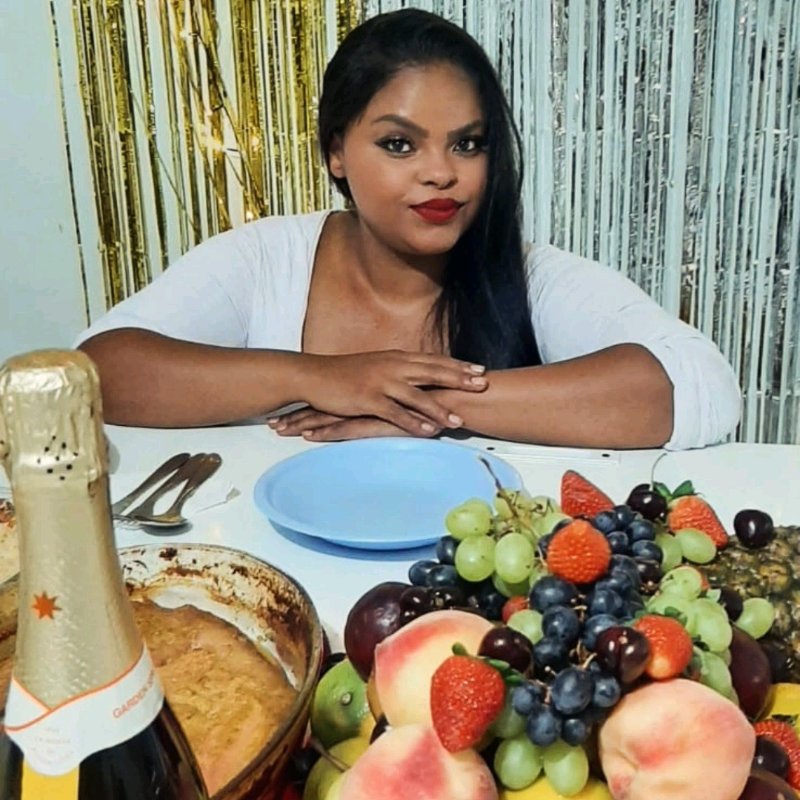
Edible centerpieces are a wonderful Brazilian touch: a carved moranga (squash) filled with flowers, a wooden board of queijo de minas, goiabada and nuts, or a cluster of exotic fruits in a low bowl from Mercado Municipal all tell a story about the region and give guests something to talk about.
Pro Tip
Use an odd number of elements in your centerpiece — three candles, five small vases, a cluster of seven fruits. Odd numbers feel naturally balanced to the human eye.
Layering with Chargers, Side Plates and Bread Boards
A charger plate — a larger decorative plate placed beneath the dinner plate — adds immediate elegance and color. Gold or silver chargers lift a simple white dinner service into formal territory; rattan or ceramic chargers read more casually Brazilian. Remove chargers before dessert unless they are genuinely part of your dishware.
A side plate for bread goes to the upper left of the setting, above the forks. Rest the butter knife across it diagonally, blade facing down. If you are serving pão de queijo or artisan sourdough, this is where individual portions land.
Resist the urge to pile on too many layers — charger, side plate, starter bowl and bread plate at once can feel cramped. Edit: choose the layers that serve your actual menu.
Lighting, Ambience and the Final Details
Candlelight is the single fastest way to make a dinner table feel special. Opt for unscented candles — scented ones compete with the aroma of the food. Votives and tea lights scattered around the table or clustered in the centerpiece create a warm, flickering glow that flatters everyone seated.
If you are eating outdoors — on a varanda or in the jardim — string lights overhead create a magical atmosphere and solve the candle-wax-in-the-wind problem. Dimmers on indoor lighting, or simply a few floor lamps instead of overhead fixtures, have the same flattering effect.
Write place cards for dinners of six or more — they remove the awkward shuffle of guests finding seats, and they signal that the host thought carefully about who should talk to whom. Handwritten place cards on kraft paper or folded card stock look far more personal than printed ones.
Do a final walk-around: look at the table from a seated perspective, straighten anything out of alignment, and check that every glass is spotless. This moment of completeness — the table fully set and waiting — is deeply satisfying, and it signals to you that you can step away from the dining room and focus on your guests.
When to Call in a Personal Chef
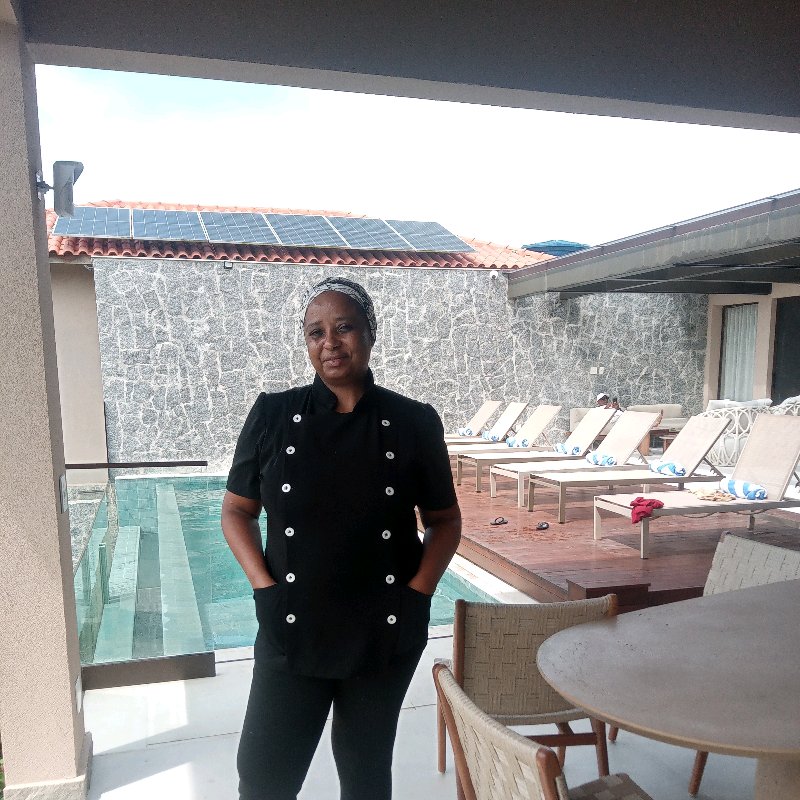
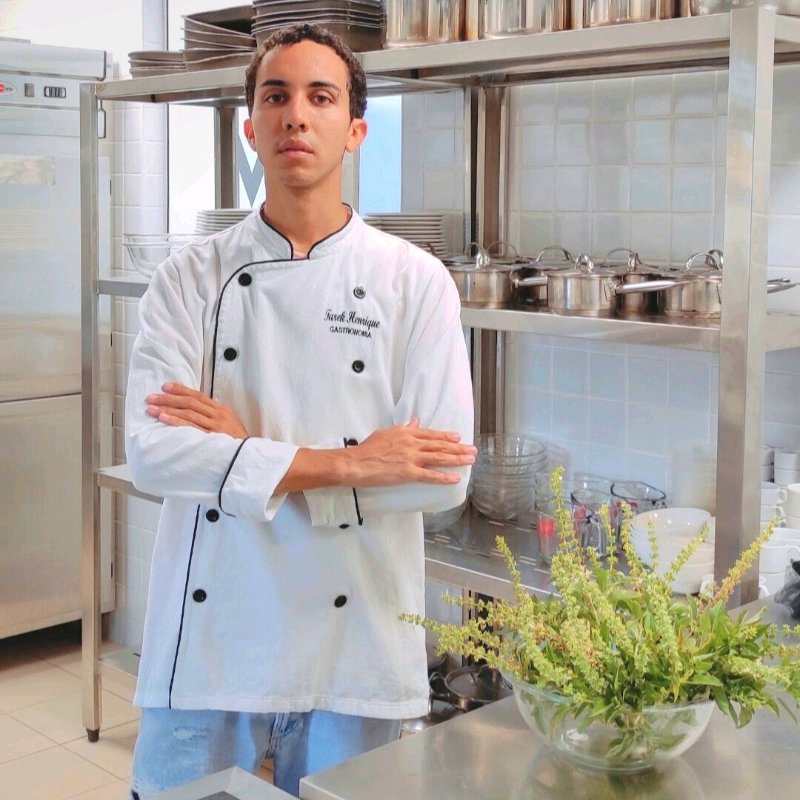
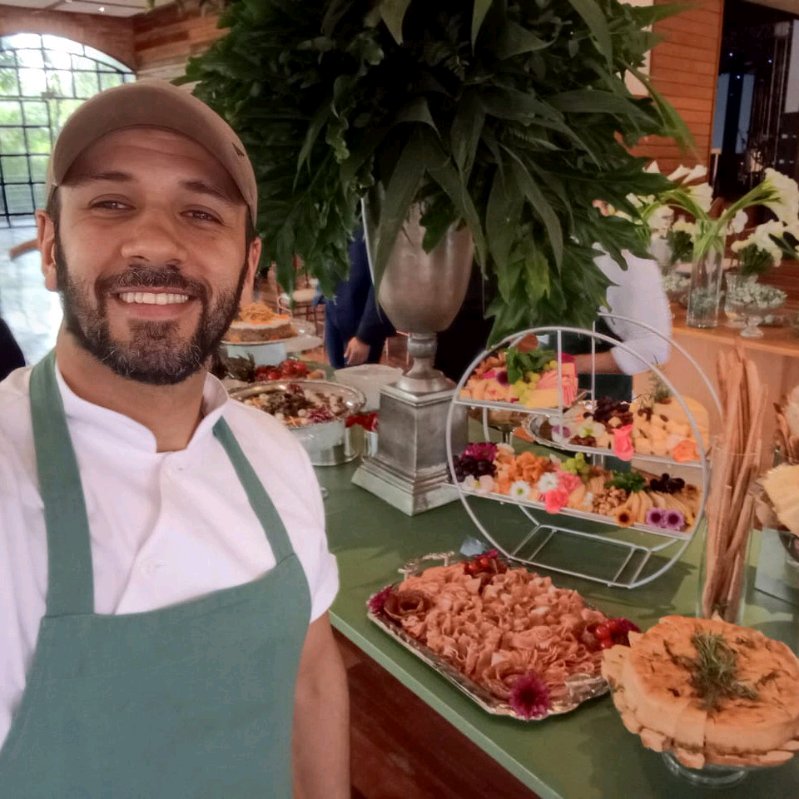
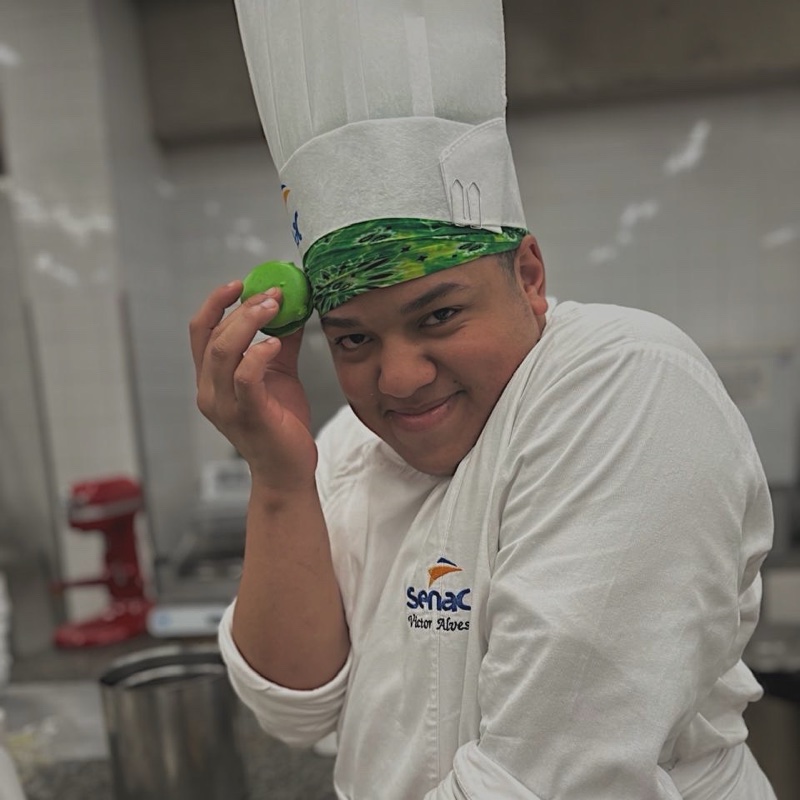
A professional personal chef from myChef does not only cook — many will also help you think through the table presentation for the occasion, advising on service flow (will plates be brought to the table individually or family-style?), which affects how you set the space. For plated tasting menus, a chef may arrive early to help stage the table.
For larger gatherings or when you want to focus entirely on your guests without any kitchen anxiety, hiring a personal chef in Brazil typically costs between R$ 250 and R$ 800 per person depending on the menu and number of courses. The investment covers not just the cooking but the entire experience design — freeing you to be a guest at your own table.