What an Indian Personal Chef Specialises In
An Indian personal chef in Brazil is typically a professional who has deep training in one or more regional traditions of Indian cooking. The country's cuisine divides broadly into North Indian (rich, dairy-forward, wheat-based, Mughal-influenced) and South Indian (rice-based, coconut-forward, legume-rich, often vegetarian), with significant further variation across Gujarat, Bengal, Goa, Rajasthan, and Kerala.
In Brazil, the Indian community is relatively small but concentrated in São Paulo, where a handful of specialist Indian chefs operate private dining services. Many bring training from culinary institutes in India or from experience in Indian restaurants in London, Dubai, or New York before settling in Brazil.
The foundation of any Indian chef's skill is spice knowledge: understanding not just which spices to use but how to treat them — when to toast whole, when to grind fresh, when to bloom in hot fat, when to add raw at the end. This understanding, more than any recipe, is what separates an authentic Indian meal from a pale imitation.
Pro Tip
Ask your Indian chef which regional tradition they specialise in before booking. A Punjabi specialist and a Kerala specialist will produce dramatically different menus — both excellent, but for different occasions and palates.
Signature Dishes You Can Expect
North Indian highlights include: butter chicken (murgh makhani) — the iconic tomato-and-cream curry that has won the world — dal makhani (slow-cooked black lentils in butter and cream, traditionally simmered overnight), palak paneer (spinach and fresh cheese curry), lamb rogan josh, chicken tikka masala, and fragrant biryanis layered with saffron-stained basmati rice, caramelised onions, and whole spices.
South Indian dishes offer a contrasting sensibility: chettinad chicken curry (fiery, aromatic, with kalpasi and marathi mokku spices), fish moilee (Kerala coconut milk fish curry), prawn masala with curry leaves and mustard seeds, sambhar (lentil soup with tamarind and vegetables), and a full dosa experience — thin fermented rice-and-lentil crepes served with chutneys and sambhar.
Vegetarian options are among the richest in world cooking: chana masala (spiced chickpeas), saag aloo (potatoes with spinach), malai kofta (paneer dumplings in cream sauce), vegetable korma, and a full thali — a plated assortment of multiple preparations served simultaneously in small bowls.
Dessert classics include gulab jamun (milk-solid dumplings in rose-water syrup), kheer (cardamom rice pudding), mango kulfi (dense Indian ice cream), and rasmalai (paneer discs in sweetened condensed milk with saffron and pistachios).
The In-Home Experience: Spices, Aromas, and Service
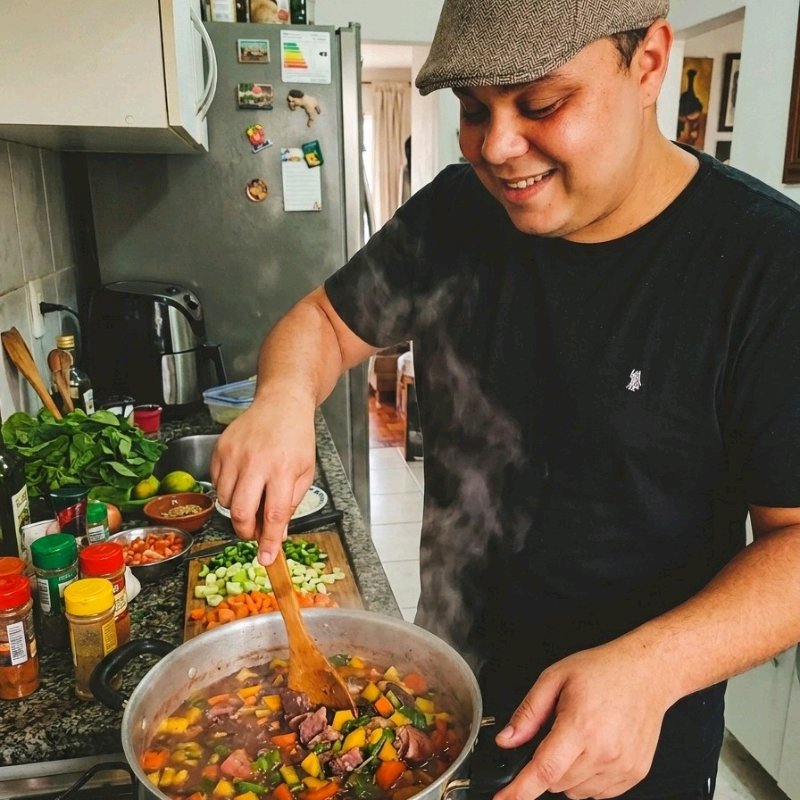
An Indian dinner at home is as much a sensory experience as a culinary one. From the moment the chef begins blooming whole spices in ghee — mustard seeds crackling, cumin releasing its earthy fragrance, cardamom opening its floral cloud — your home is transformed. The aromas of an Indian cooking session linger pleasantly and signal to arriving guests that something extraordinary is being prepared.
The chef typically arrives 2–3 hours before service to begin the layered preparation that Indian cooking requires. Many curries improve with slow simmering; biryanis require precise timing across multiple stages; doughs for naan or paratha need resting time. A professional Indian chef orchestrates these timelines simultaneously with military precision.
Service may be plated (individual portions, course by course) or thali-style (multiple preparations served simultaneously in small bowls around a central plate), depending on your preference and occasion. The thali format is particularly festive and generates a sense of abundance that delights groups.
✓Specify heat tolerance clearly
Indian cuisine ranges from mild (korma, malai) to genuinely searingly hot (vindaloo, chettinad). Rate your group's heat tolerance on a scale of 1–10 so the chef calibrates accordingly.
✓Confirm spice freshness
Ask whether the chef grinds their own garam masala and spice blends. Fresh-ground spices produce incomparably more aromatic curries than pre-packaged blends.
✓Discuss bread preferences
Naan (leavened, cooked in a skillet), paratha (flaky whole-wheat flatbread), or puri (deep-fried puffed bread) all serve different roles. Tell the chef which you prefer.
✓Clarify vegetarian or vegan requirements
Indian cuisine is the world's most sophisticated vegetarian cooking tradition. A purely vegetarian menu can be as impressive — arguably more so — than one featuring meat.
Pricing for an Indian Personal Chef in Brazil
An Indian dinner experience for 4–8 guests — 3–4 courses including starters, a main thali or plated curry with rice and bread, and dessert — costs R$ 260–R$ 480 per person in Brazil, inclusive of labour and ingredients. A premium multi-course tasting menu exploring several regional traditions costs R$ 450–R$ 650 per person.
The ingredient cost of a serious Indian dinner is moderate: many of the key proteins (chicken, lamb, lentils, paneer) are readily available in Brazil, but specialty items — saffron, high-quality ghee, certain dried whole spices, and specialty lentils — may require importing from São Paulo's Indian grocery specialists. Expect an ingredient premium of R$ 40–R$ 80 per person for a fully authentic menu.
Indian cooking classes are increasingly popular in Brazil — a hands-on session learning to make butter chicken and naan from scratch for 2–4 people costs R$ 400–R$ 650. A full curry night class (covering three curries, a dal, and a dessert) for a group of 6–8 runs R$ 800–R$ 1,200 total and makes an excellent team-building or birthday party activity.
Pro Tip
Request a menu where at least one dish is cooked entirely from scratch — ghee-made, spice-ground, slow-simmered — rather than using any jarred pastes. The difference is immediately perceptible and justifies the specialist's premium.
Choosing the Right Indian Chef for Your Occasion
The most important question to ask is regional specialisation. North Indian (Punjabi, Mughal, Delhi-style) is richer, creamier, and more universally familiar to Brazilian palates unfamiliar with Indian food. South Indian is lighter, more acidic, and relies heavily on coconut, rice, and legumes. Both are exceptional; the choice depends on your guests' adventurousness and your occasion.
Look for evidence of from-scratch cooking in the chef's portfolio. Photos of mortar-and-pestle spice grinding, whole spice tempering, and hand-rolled flatbreads signal authenticity. Chefs who work from pre-made curry pastes produce serviceable but not exceptional results.
For vegetarian-focused groups, prioritise chefs who have a strong background in Indian vegetarian cooking specifically — ideally from a Gujarat, South Indian, or Rajasthani background, where vegetarianism is central to the culinary identity rather than an accommodation.
✓Ask about regional specialisation
North, South, or a specific regional focus (Goan, Keralan, Bengali) produces more authentic, coherent menus than a generic 'Indian food' offer.
✓Confirm from-scratch spice grinding
Ask specifically whether they grind their own garam masala and curry bases. This single detail separates authentic Indian cooking from restaurant shortcuts.
✓Check their bread repertoire
A chef who can make naan, paratha, puri, and dosa is a specialist. One who only does naan from a packet is not.
✓Request a vegetarian showcase menu
Even if your group eats meat, asking for a vegetarian tasting menu option tells you whether the chef truly understands Indian cooking or relies on meat as a crutch.
✓Confirm specialty ingredient sourcing
Ask where they source saffron, dried whole spices, and specialty lentils. São Paulo's Liberdade neighbourhood and dedicated Indian grocery suppliers are the key sources.
Occasions Where an Indian Chef Shines
A curry night for a group of 6–10 friends is the most natural and sociable context for an Indian personal chef — the thali format, the multiple dishes, the communal bread basket, and the natural conversation-starter that is a great biryani make it an ideal dinner-party cuisine.
Diwali celebrations are an obvious match: an Indian chef can design a festive menu of traditional Diwali sweets (mithai) and savoury dishes that brings the festival's spirit of abundance and warmth to a home gathering. Even in Brazil, these events have become popular among both Indian-heritage and culturally curious communities.
For vegetarian or vegan dinner parties, an Indian chef may be the single best choice available — no other cuisine tradition offers such richness, variety, and satisfaction in purely plant-based cooking.
Preparing Your Home for an Indian Cooking Session
Good ventilation is important: the high-heat stages of Indian cooking — blooming spices, stir-frying onions, finishing curries — produce intense, fragrant smoke that is wonderful to smell but can trigger smoke alarms in poorly ventilated kitchens. Open windows or activate your range hood before the chef begins.
Indian cooking uses large volumes of oil and ghee. Ensure your stovetop is clean and has functioning burners that can sustain consistent medium heat for long periods — the chef will typically have 3–4 pans going simultaneously during peak preparation.
If serving a thali, small individual bowls (katori) are ideal — Indian grocery stores in São Paulo sell stainless steel sets. Alternatively, the chef may bring their own presentation vessels. Discuss this at booking stage.
Pro Tip
Indian spice aromas linger in fabrics and soft furnishings. If you have strong preferences about home scents, open windows and use ventilation actively during cooking. The aromas are not unpleasant — quite the opposite — but they are persistent.