What You're Actually Paying For
When you hire a personal chef, you're paying for several distinct things bundled into one: menu planning tailored to your group, professional shopping (including knowledge of where to find the best ingredients), skilled cooking, plating, kitchen cleanup, and the expertise to pull it off reliably. It's not just someone cooking — it's the entire production of a restaurant-quality meal, delivered to your home.
In Brazil, this service for a dinner of four to six people ranges from R$1,200 to R$3,500 all-in, depending on menu complexity, city, and chef seniority. That range covers everything from a well-executed three-course meal by a skilled chef to an elaborate tasting menu from someone with serious restaurant credentials.
The question is whether what you receive justifies that expenditure relative to your alternatives — and that answer is genuinely different depending on the occasion, your priorities, and what your time is worth.
When a Personal Chef Is Absolutely Worth It
Special occasions that demand privacy are the clearest case. A marriage proposal at a restaurant is a logistical gamble with strangers watching. A chef arriving at your apartment in Moema or your house in Perdizes, setting a table with candles and seasonal flowers, and cooking a dinner that ends with your favorite dessert — that's a moment you control completely. The same applies to anniversaries, milestone birthdays, and intimate celebrations that restaurant dining rooms simply can't protect.
Groups of six or more where someone has a significant dietary restriction tip decisively toward a personal chef. Celiac disease, severe nut allergies, or a medically prescribed diet create real anxiety at restaurants — cross-contamination risks, skeptical servers, limited substitution options. A chef who designs the entire menu around your guest's needs from the start eliminates that anxiety at a price that, for a group, often competes directly with a good restaurant.
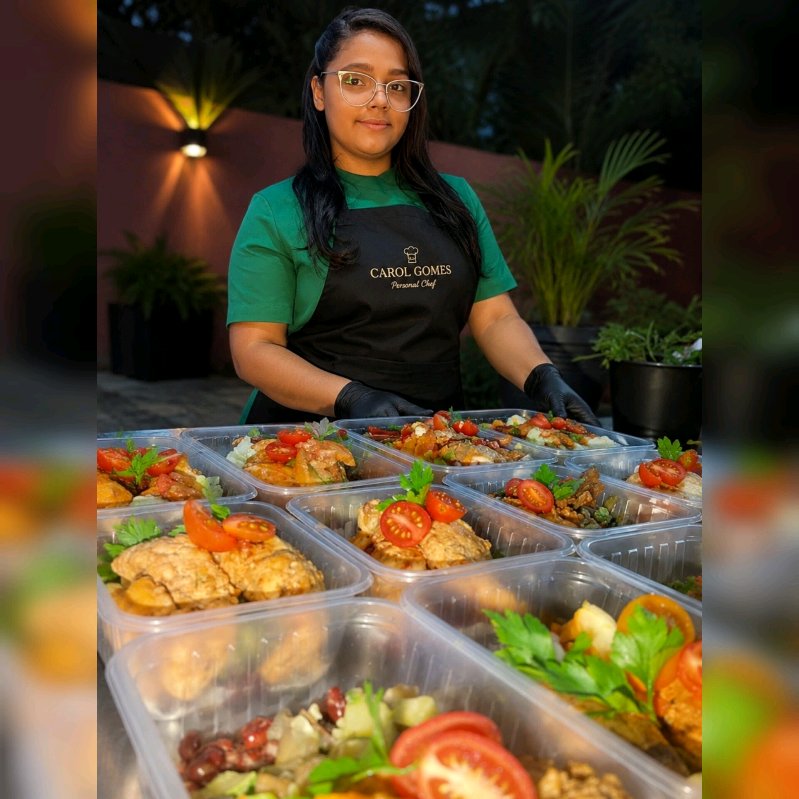
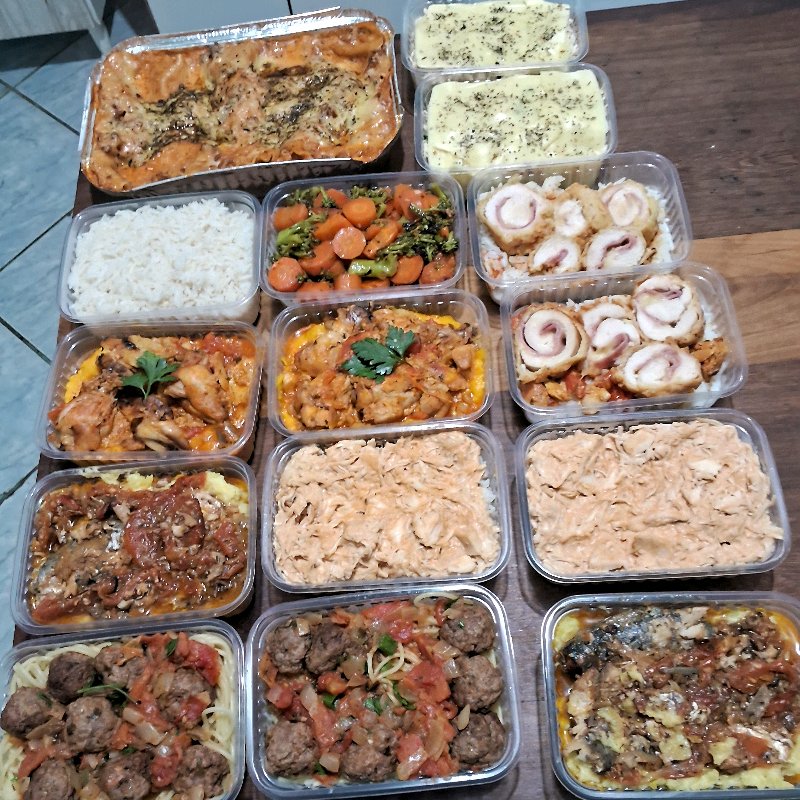
Weekly meal prep for busy households is the value case that surprises people most. A chef who spends four to five hours in your kitchen on a Sunday, producing 15–20 portioned, varied, nutritious meals for the week, often costs R$600–R$900 inclusive. Divided across a week of not ordering delivery or eating out, the math frequently works in the chef's favor — and the health and quality advantages are substantial.
✓Privacy is essential
Proposals, vulnerable anniversaries, intimate celebrations — these benefit enormously from the control a chef dinner provides.
✓Dietary restrictions are complex
When one or more guests has a serious allergy or medical diet, a chef who designs around it from scratch is worth a significant premium.
✓Group is six or more
The per-person cost at this group size typically competes directly with a quality restaurant, making the chef's additional benefits essentially free.
✓You value your Sunday evening
A meal prep chef who works while you relax or spend time with family delivers time savings that compound across the week.
When a Personal Chef Probably Isn't Worth It
For groups of two at a mid-range occasion, a comparable restaurant often costs the same or less — and requires zero coordination from you. If the occasion doesn't demand privacy or customization, and you're happy to be out of the house, the restaurant may simply be the easier and cheaper choice.
If you're a skilled home cook who genuinely enjoys cooking for guests, hiring a chef for a casual dinner party removes the activity you find rewarding. The financial cost and the logistics may not be justified when you would have had fun doing it yourself.
Very last-minute occasions are another case where the math doesn't always work. A personal chef needs planning time — at minimum 24–48 hours, often more. If you're deciding at 5 p.m. that you want a great dinner at 8 p.m., a restaurant wins on pure logistics.
Pro Tip
Honest test: if you'd have a great time at your favorite restaurant and the occasion doesn't require privacy or dietary precision, save the chef budget for an occasion that genuinely demands it.
The Time-Value Calculation
For many people, the real return on a personal chef isn't the food — it's the hours. Planning a menu, shopping across two or three stores, cooking for three hours, and cleaning up afterward can consume an entire day. A chef absorbs all of that, and you spend that time on work, rest, or being present with your guests from the moment they arrive.
If your hourly rate — professionally or just in terms of what your time is genuinely worth to you — exceeds R$150–R$200 per hour, the time a chef saves in preparation and cleanup alone begins to cover a meaningful portion of the service fee. This isn't a perfect calculation, but it reframes the cost as a trade rather than a pure expense.
For parents of young children, the calculation is even more stark. Cooking a dinner-party-quality meal while managing toddlers isn't just difficult — it's a specific kind of exhaustion that a chef eliminates entirely.
The Quality and Experience Premium
Professional chefs have skills and access that home cooks don't, and that gap is most visible on technically demanding dishes and unfamiliar cuisines. A Brazilian chef who trained in Japanese technique can produce a sashimi spread and omakase-style courses at home that would be genuinely difficult to replicate — and the ingredient sourcing knowledge alone is worth something.
There's also the intangible of having someone else run the kitchen so you can host fully. Hosts who cook are multitasking: monitoring doneness while managing conversation, returning to the kitchen while guests help themselves to another round. A chef lets you stay at the table the entire evening, which changes the social experience for both you and your guests.
Regular clients — people who book a meal-prep chef weekly or a dinner chef monthly — report that the experience normalizes quickly and feels like a practical lifestyle choice rather than an indulgence. The question 'is it worth it?' eventually shifts to 'what was I doing before?'
Comparing the Alternatives Honestly
The most common alternatives to a personal chef are: cooking yourself, dining at a restaurant, or ordering delivery. Each has a legitimate use case. Cooking yourself is right when you enjoy it and have the time. A restaurant is right when atmosphere matters and the group is small. Delivery is right when the occasion is casual and expectations are modest.
A personal chef outperforms all three alternatives most decisively when: the group is large, the dietary needs are complex, the occasion is meaningful, or the host's time has real value. The worst comparison to make is a personal chef against a single meal from iFood or Rappi — that's a different product category for a different need.
The fair comparison is: a personal chef dinner versus a quality restaurant for the same group size and occasion. On that comparison, the chef frequently wins on value — and almost always wins on experience.
How to Know Before You Book
Before booking, ask yourself four questions: Is the occasion meaningful enough that the details matter? Is the group large enough that a restaurant would be expensive and complicated? Are there dietary needs that a restaurant handles poorly? And do you have the lead time to plan properly?
If you answer yes to two or more of these, a personal chef will very likely be worth it. If you answer no to all four, spend the evening at a great restaurant and enjoy the night without coordination.
Getting a quote is free and commits you to nothing. Most chefs on myChef respond within a few hours with a menu proposal and price estimate — which is often the moment the decision becomes obvious in one direction or the other.