Why Eating Well After Birth Is Harder Than Anyone Warns You
Brazilian culture is genuinely attentive to the postpartum period — the tradition of a avó chegando para ajudar, the resguardo customs, the doulas and the parteiras all reflect a cultural acknowledgment that new mothers need support. But the modern urban reality often looks different: both parents back at work within weeks, extended family in another city, and the kitchen empty at 9pm because nobody had time to shop, let alone cook.
The consequences are nutritional rather than just inconvenient. A postpartum body recovering from vaginal delivery or cesarean section has elevated needs for iron (to replace blood lost during birth), protein (for tissue repair and, for breastfeeding mothers, milk production), calcium (drawn from the mother's reserves during lactation), and anti-inflammatory nutrients that support healing. Meeting these needs consistently on delivery pizza and random snacks is genuinely difficult.
New fathers and non-birthing partners are equally affected. Sleep deprivation impairs the cognitive capacity to plan and cook, hunger management becomes reactive rather than proactive, and the default of 'just order something' delivers inconsistent nutrition at high cost over weeks and months.
What a Postpartum Chef Session Looks Like
A postpartum meal prep session is structured around one constraint above all others: the food must be maximally convenient to consume with one hand, at any time of day or night, at whatever temperature is available, with no preparation required. This shapes every recipe decision.
One-handed eating is not just a preference — it is a physiological reality of newborn care. A parent feeding or holding a baby needs food that can be consumed in bites with a fork or eaten directly from the container. Soups in individual lidded jars, frango desfiado that lifts from a container with a fork, bolinhos de arroz que podem ser comidos frios, fatias de bolo integral that require no cutting — these are the formats that actually get eaten at 3am when the other hand is occupied with a baby.
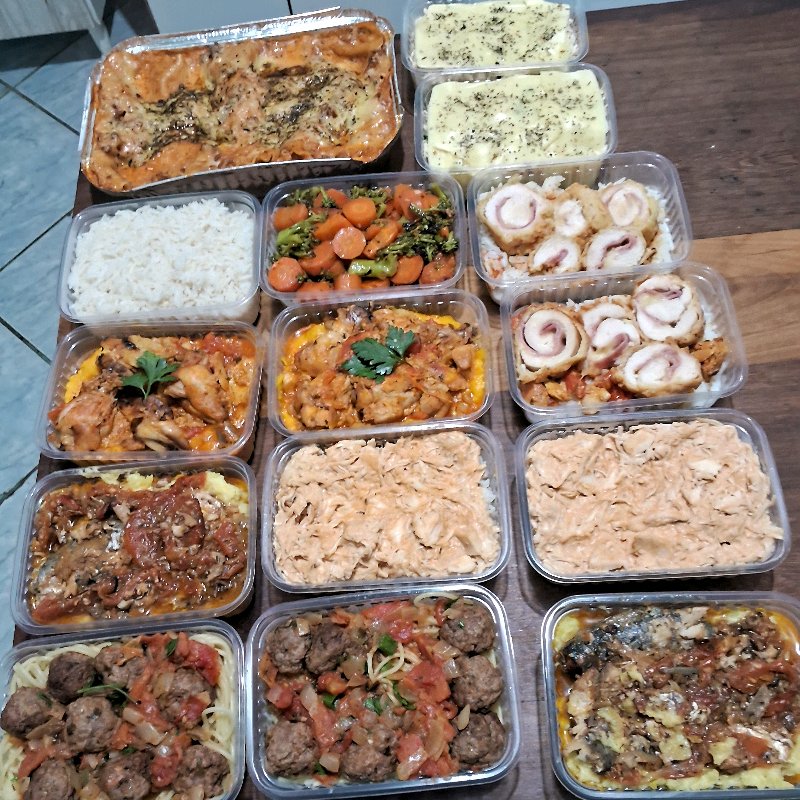
A typical postpartum session of three to four hours produces: a large pot of caldo de galinha caseiro (bone broth) portioned in jars for immediate consumption; a batch of meals-in-bowls with protein, grain and vegetable combined; snack foods requiring zero preparation (bolinhos, fruta cortada, iogurte com granola portioned individually); and at least one substantial soup or stew that reheats in minutes. The kitchen is left clean and the fridge organized so everything is immediately accessible.
Pro Tip
Ask the chef to prepare one batch specifically for middle-of-the-night feeding sessions: small, high-protein snacks in a dedicated container on a shelf within easy one-hand reach. Nuts, cheese cubes, mini-frango wraps and fruit are all good candidates.
Nutritional Priorities for the Postpartum Period
Postpartum nutritional needs differ meaningfully from general healthy-eating guidelines, and a chef briefed on these priorities will build the menu accordingly. For breastfeeding mothers, caloric needs increase by approximately 400–500 kcal daily over pre-pregnancy maintenance — all of which should come from nutrient-dense whole foods rather than empty calories.
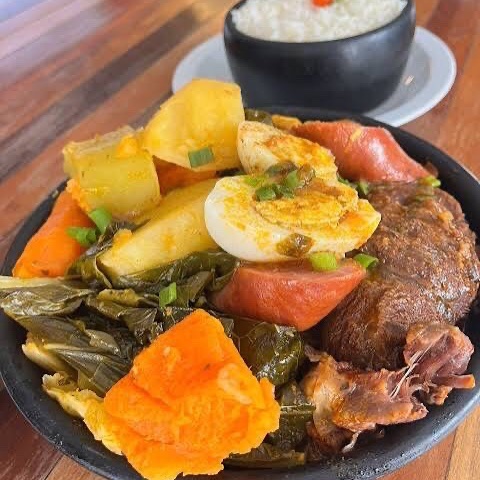
Iron recovery after birth is a priority for most mothers. Brazilian whole-food sources rich in iron include carne bovina (especially fígado, which a chef can prepare palatably even for those who do not normally enjoy it), feijão-preto and lentilhas, couve and espinafre, and beterraba. A squeeze of limão over iron-rich plant foods dramatically increases absorption. A chef aware of this pairing will incorporate it naturally.
Galactagogue foods — those traditionally associated with milk production support — are part of Brazilian culinary heritage as well as international lactation research. Aveia (oats) is the most research-backed option and works beautifully in overnight oats, bolos caseiros, or porridge. Feno-grego (fenugreek) appears in traditional Brazilian postpartum recipes as teas and seasonings. While evidence varies, incorporating these foods costs nothing and many mothers find them helpful.
✓Iron-rich protein at every main meal
Carne bovina, frango, feijão or lentilhas at lunch and dinner ensures consistent iron intake during the recovery period.
✓Calcium at least twice daily
Iogurte natural, queijo, couve, tapioca com requeijão or fortified plant milks cover lactation-related calcium demands.
✓Anti-inflammatory seasonings in every batch
Cúrcuma, gengibre and azeite de oliva in cooked dishes support tissue healing and reduce postpartum inflammation.
✓High-fiber foods to support postpartum digestion
Arroz integral, feijão, frutas com casca and raw vegetables help prevent the constipation common in the early postpartum period.
✓Adequate hydration support
Ask the chef to prepare água aromatizada or hibisco tea in a large jar in the fridge — visible, accessible hydration cues prevent dehydration during breastfeeding.
Meals That Actually Work at 3am
The overnight hours with a newborn are when nutrition planning most completely collapses. A fridge full of complicated meals that require assembly, cutting or reheating becomes useless when a parent is standing in the dark kitchen with a crying baby in the carrier. The chef's job in this context is to design for the worst-case scenario: completely depleted, sleep-deprived, one-handed, no patience, no time.
Foods that work in this context: individual jars of caldo de galinha that can be sipped directly; bolinhos de frango or espinafre that are consumed at room temperature in three bites; fatias de bolo de aveia com banana that need no cutting; iogurte grego portioned into small jars with fruit layered on top; cubos de queijo frescal with sliced fruit arranged in a single open container. The common thread is immediacy — zero friction between opening the fridge and eating.
Designate a dedicated 'night shelf' in the fridge — bottom shelf, front row — that the chef fills with specifically these formats. Tell every partner, family member or doula about this shelf. When one parent is down or sleeping, the other parent (or a visiting avó) knows exactly where the ready-to-consume options are without searching.
Gifting a Chef to New Parents
A postpartum chef session is widely considered one of the most genuinely useful gifts for new parents — far more practical than another set of baby clothes or a toy the baby will not use for months. If you are planning a gift for a new family in your life, consider booking two or three chef sessions as a gift through myChef.
The standard format is a gift card or a direct booking on the parents' behalf, with the chef coordinating directly with them for timing. The expectation-setting is simple: the chef arrives, the parents do not need to do anything except let them in and answer a few minutes of questions about preferences. Everything else is handled.
For families coordinating among multiple friends or family members, a collective gift that covers three to four sessions over the first month postpartum is a meaningful contribution to the new parents' wellbeing. This format — multiple smaller contributors toward a significant gift — is easily organized through myChef's gift options and provides the new family with genuine, consistent support during the most demanding phase.
Pro Tip
If you are gifting a postpartum chef session, ask the chef to prepare a 'freezer batch' as part of one session — portions designed specifically for freezing that extend the gift's value by weeks beyond the visit date.
Scheduling Around a Newborn's Unpredictable Day
A newborn's schedule is, by definition, not a schedule. Chef sessions need to accommodate this reality. Most chefs experienced in postpartum cooking are comfortable arriving when the baby is settled, working quietly around naps, and adjusting the session start time with reasonable flexibility on the day. Communicate openly about your current sleep and feeding rhythm when booking.
Sessions of two to three hours are typically manageable even in a chaotic newborn household. The chef arrives with everything needed, minimizes disruption, and structures the session to be self-contained regardless of what else is happening in the home. If the baby has an unexpected rough day, the chef can work largely independently with minimal guidance.
Biweekly sessions are often more realistic than weekly in the first four to six weeks — the household's rhythm is too variable for strict weekly schedules. By weeks six to eight, most families with newborns have a rough daily pattern established and can transition to a consistent weekly prep cadence if they choose to continue.
The Mental Load Argument for New Parents
The postpartum period's most underestimated burden is not physical fatigue or feeding schedules — it is the relentless mental load of managing every decision about a fragile, dependent human life. What does the baby need? Is that cry hunger or pain? Should we try the pacifier again? Against this backdrop, adding 'what are we going to eat tonight' to the decision list is genuinely harmful.
Removing food decisions from the mental load of new parents has measurable quality-of-life impact. When a refrigerator is stocked with labeled, nutritionally balanced, immediately edible meals, one significant category of decisions disappears for the week. That cognitive space — however modest it seems in isolation — becomes available for what actually matters: recovering, bonding, and figuring out parenthood.
Brazilian culture has long recognized the value of community support in the postpartum period. The contemporary version of this support, for urban families without nearby extended family, is organized services. A personal chef is one such service — professional, reliable, high-quality, and calibrated to exactly what the family needs.