The Meal Prep Boom: From Niche to Mainstream
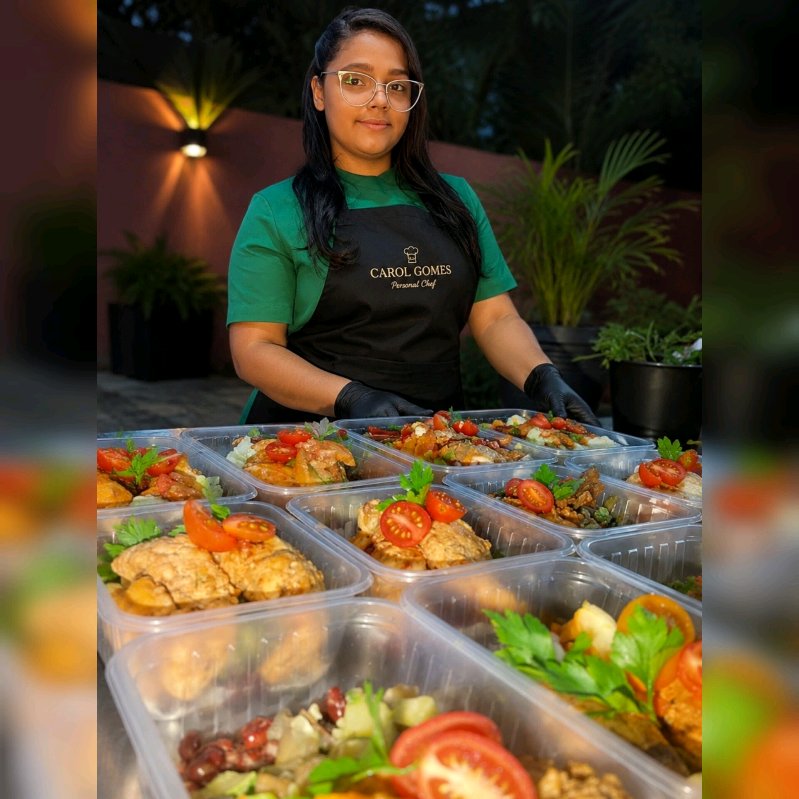
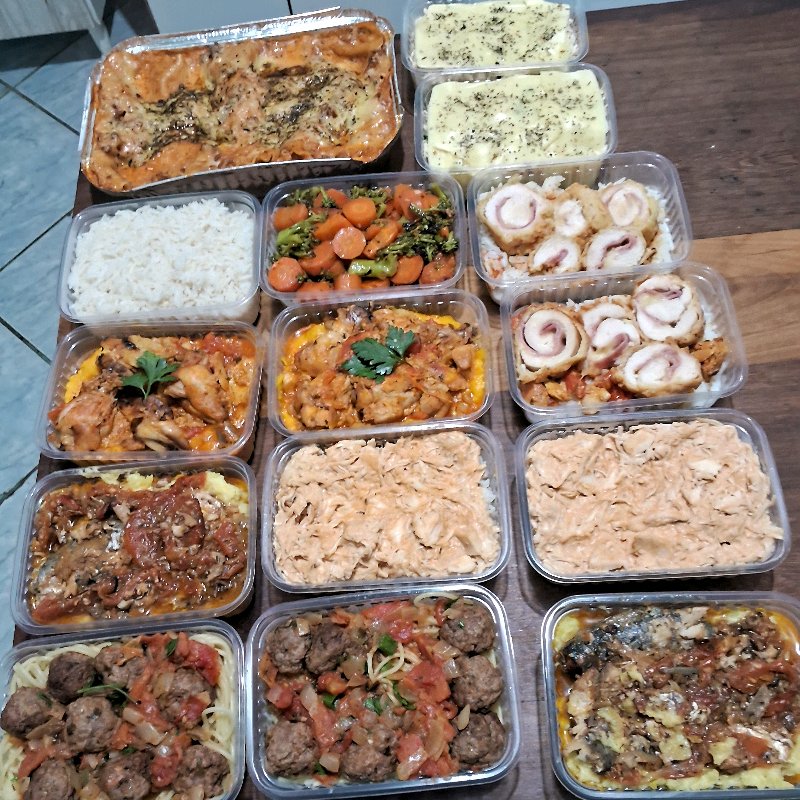
Weekly meal prep services have become the fastest-growing segment of Brazil's personal chef market. Between 2023 and 2025, search volume for terms like 'chef meal prep São Paulo,' 'marmita personalizada com chef' and 'personal chef semanal' grew by an estimated 180% in major Brazilian cities. The driver is not primarily affluence — it is the convergence of three forces: long urban commutes eliminating cooking time, rising quality standards among professionals who no longer accept the nutritional compromises of daily delivery apps, and increasingly competitive pricing as more chefs enter the segment.
The meal prep client profile in 2026 spans a much wider demographic than the corporate executive stereotype. Fitness enthusiasts in Belo Horizonte, young families in Curitiba's Batel neighborhood, remote workers in Florianópolis and healthcare professionals in Recife are all active users of weekly chef prep services. The common thread is time scarcity and a preference for eating well — not necessarily deep pockets.
Chef pricing in the meal prep segment has also diversified. Entry-level prep chefs working primarily with basic proteins and grains charge R$250–R$400 per session; mid-tier chefs with culinary school backgrounds and specialty knowledge (macro-calibrated, allergen-aware, postpartum-focused) charge R$450–$R750; and premium-tier performance nutrition chefs who work with athletes and executives charge R$800 and above. This range makes the service genuinely accessible across multiple income levels.
Health and Performance Eating Goes Private
Brazil's relationship with fitness and body culture has always been intense — but in 2026, performance nutrition has moved from the gym into the home kitchen in a meaningful way. The personal chef sector is capturing demand from a generation of Brazilian athletes, crossfitters, trail runners, cyclists and practitioners of beach volleyball and jiu-jitsu who have graduated beyond generic supplements and meal delivery services toward personalized, chef-prepared nutrition.
Macro-calibrated meal prep — where every portion is designed around a client's specific protein, carbohydrate and fat targets — is now a specific service offering on myChef and similar platforms. Chefs who can read a nutritional brief from a sports nutritionist and execute it consistently across a ten-portion batch are in high demand and can command premium rates.
The crossover between professional chefs and sports nutrition specialists is also emerging. Some chefs now hold certifications in sports nutrition alongside culinary degrees, creating a hybrid professional that did not exist as a distinct category five years ago. These chefs are particularly concentrated in São Paulo's Vila Olímpia and Jardins neighborhoods — areas with high concentrations of fitness-oriented professionals — and in coastal cities like Florianópolis and Balneário Camboriú where outdoor sports culture is embedded in daily life.
Pro Tip
If you are looking for a performance nutrition chef, search myChef profiles for chefs who list specific sports or dietary specializations. A chef who has worked with athletes in CrossFit boxes or triathletes will have the practical understanding of training periodization that general meal prep chefs may lack.
The Rise of In-Home Fine Dining
Brazil's restaurant industry, still recovering from structural shifts accelerated by the pandemic, is facing a growing behavioral competitor: Brazilians who choose the restaurant-quality experience at home over going out. The personal chef for private dinner experiences category — where a chef prepares a restaurant-caliber multi-course meal in the client's home — has expanded from São Paulo's affluent neighborhoods to mid-tier cities and occasions.
The appeal is specific: privacy, customization, zero waiting, and food prepared by a professional who knows exactly who is eating it and what they prefer. A chef preparing a seven-course menu for six people in a Pinheiros apartment, with wine pairing and tableside service, delivers an experience that most Brazilian restaurants cannot replicate at any price point — the combination of skill, intimacy and personalization is structurally impossible at restaurant scale.
Brazilian culinary talent driving this segment has elevated significantly. A generation of chefs who trained at Fasano, D.O.M., or at culinary schools in São Paulo and internationally before returning to Brazil brings classical technique and ingredient knowledge that sets private dining far above its earlier reputation as a novelty. Chefs who trained under Alex Atala's contemporaries or completed stages in European kitchens are increasingly choosing the personal chef route as a creative and financially attractive alternative to restaurant employment.
Tourism and Vacation Rental Dining
One of the clearest emerging use cases for personal chefs in Brazil is the Airbnb and vacation rental market. As Brazil's domestic tourism market has grown — particularly in destinations like Florianópolis, Trancoso, Búzios, the Costa Verde, and the Chapada Diamantina — travelers with access to private villas and rental houses are increasingly choosing to enhance their stay with a personal chef rather than restaurant-hopping.
The pattern is specific: a group of eight to twelve friends renting a casa na beira-mar in Garopaba or a fazenda converted into a rental property in the Mantiqueira mountains splits the cost of a chef for two or three dinners during the stay. Per-person, this often costs less than a mid-range restaurant — but delivers local, market-fresh ingredients prepared specifically for the group's preferences and dietary needs.
Regional cuisine as a draw is particularly strong in this segment. A chef in Bahia who prepares a moqueca de peixe with dendê oil sourced from a local cooperative, using fish from that morning's catch in a beach house kitchen in Arraial d'Ajuda, creates an experience that no restaurant can replicate. The localism of the ingredients, the setting and the chef's knowledge converge into something genuinely memorable.
Gifting and Experience Economy
Brazil's gift economy has been shifting from objects to experiences for over a decade, and the personal chef experience now occupies a meaningful position in the gifting landscape. Birthday gifts, anniversary presents, new baby celebrations and thank-you gestures involving a personal chef dinner or cooking class are increasingly common in urban Brazil's gifting culture.
The appeal is clear: a personal chef dinner for two as an anniversary gift is personal, non-perishable, and delivers an experience rather than an object that may sit unused. A cooking class with a skilled chef as a birthday gift for a food-enthusiast friend is memorable in a way that another bottle of wine or a restaurant gift card is not.
The myChef platform has responded to this trend with gift cards and structured gifting options that allow the sender to specify a value or a specific service type and let the recipient customize their experience. This removes the last friction from chef-experience gifting — the uncertainty about whether the recipient's preferences will be well-served — while preserving the personalization that makes the gift meaningful.
Pro Tip
When gifting a chef experience, include a personal note with the gift card explaining why you chose this specific experience for this person. A chef dinner for two means something different as 'a celebration of your decade of friendship' than as a generic luxury gesture — the context makes it personal.
Dietary Complexity as a Growth Driver
Brazil's population is grappling with a genuine nutritional transition: rising rates of type 2 diabetes, hypertension and metabolic syndrome coexist with growing adoption of plant-based diets, gluten-free lifestyles, sports nutrition protocols and functional food philosophies. The result is a consumer base whose dietary requirements are increasingly complex and individualized — exactly the domain where a personal chef outperforms any standardized food service.
Demand for chefs who can cook confidently within multiple dietary frameworks simultaneously — a table where one person is ketogenic, another is vegan, one has celiac disease and the host is eating for postpartum recovery — is growing. These 'multi-restriction' meals are structurally impossible for a restaurant to serve but are a normal creative challenge for a skilled personal chef.
Plant-based and vegan cuisine specifically has become a distinct specialty within the personal chef market. São Paulo's vegan restaurant scene — among the most developed in Latin America, with neighborhoods like Vila Madalena leading — has produced a generation of plant-based chefs with sophisticated techniques for creating complete-protein, nutritionally balanced, texturally satisfying meals that bear no resemblance to the brown-rice-and-salad stereotype of earlier vegan catering.
Technology, Platforms and the Future of Booking
The operational infrastructure of personal chef services in Brazil has modernized significantly. Platforms like myChef provide verified chef profiles, client reviews, structured booking, and payment security — removing the friction that previously required word-of-mouth networks to find a good chef. This infrastructure shift has made the personal chef category accessible to clients who would never have known where to start with the search previously.
Mobile-first booking reflects Brazil's smartphone culture — Brazilians lead Latin America in mobile commerce adoption, and the expectation that a personal chef can be found, vetted and booked within a single phone session is now realistic on platforms that have invested in the user experience. Same-week availability for meal prep sessions is increasingly common in major cities as the chef supply has grown.
Looking forward to the second half of 2026 and into 2027, the trends point toward greater regional expansion (platforms growing beyond São Paulo and Rio into mid-sized cities), deeper specialization within the chef community (performance nutrition, postpartum, allergen-specialist, regional cuisine), and the normalization of chef services as a recurring household expense rather than an occasional luxury — a shift that mirrors how personal training and home cleaning services became integrated parts of Brazilian urban professional life over the past decade.